
Shop ClassicIndustries.com
classic-news-blog-main-header-1

Restoring A 1969 Z/28 Camaro: Chapter 7 - Reupholstering Seats & Door Panels

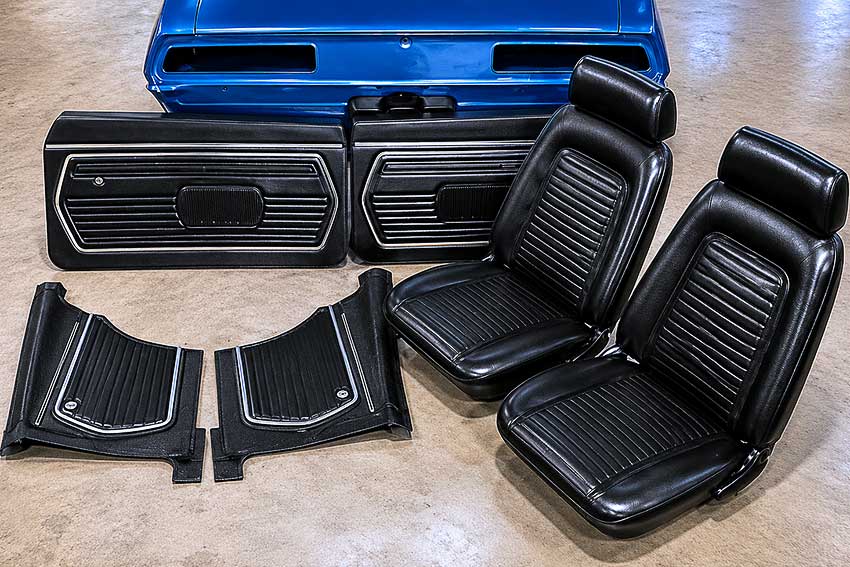
Our project Z/28's interior was a mess. When we pur­chased the car, the interior looked like a remnant from one of those movie cars that has had its in­sides blown out by a terrorist bomb. In reality, our 1969 Camaro interior was a terror: the seat covers were ripped and torn, the carpet was faded and shredded, and the door panels were all of the above. But from the bright side, we were lucky - all the correct parts were in their correct places. At least no one had replaced the original 1969 seats with high ­backs from a 1973 Camaro.

Restoring A 1969 Camaro Z/28: Chapter 6 - Putting On The Paint

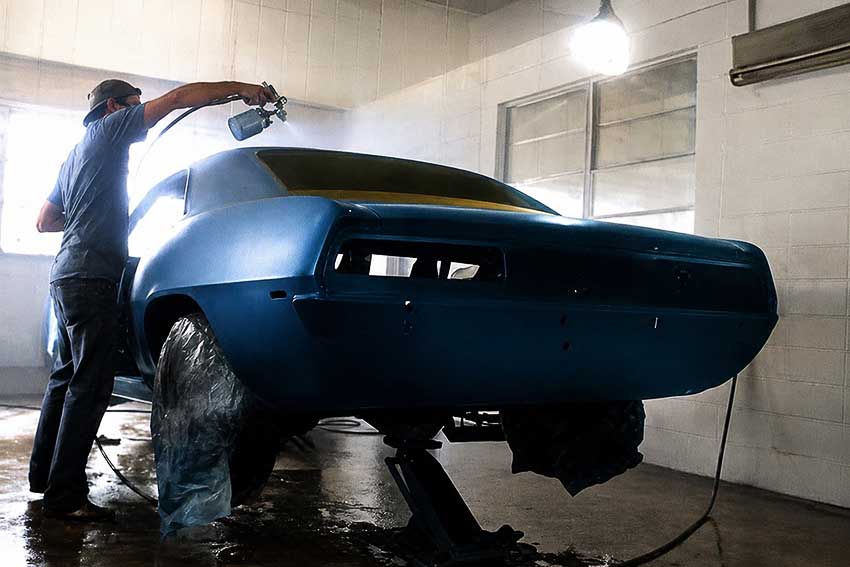
In the end, your Camaro will be judged by its exterior fi­nish. No matter how good the interior looks, or how de­tailed the engine compartment is, people always look at the paint first. If the paint falls short, they usually don't bother to check out the rest of the car. But if the paint is really slick, really deep-looking, then you'll have to fight off the spectators with a stick. 

Restoring Your 1969 Camaro Z/28: Chapter 5 Engine Rebuild

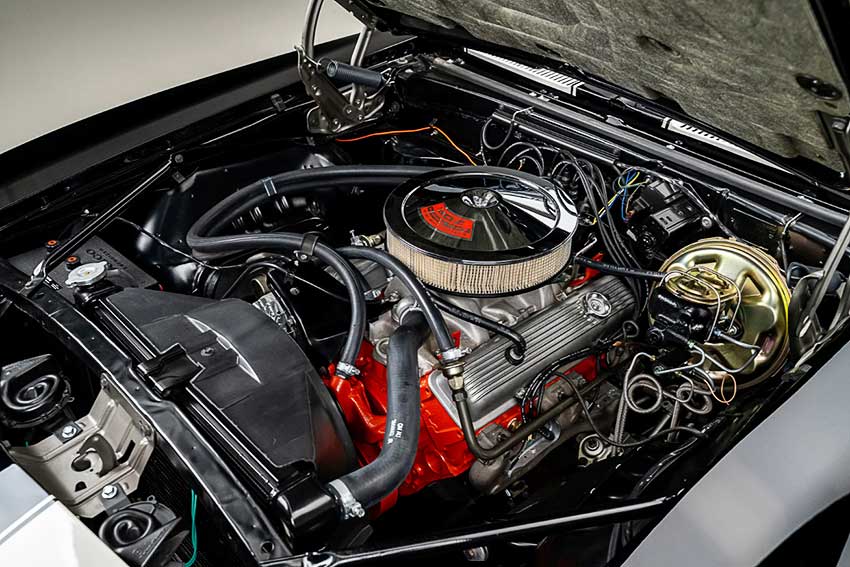
An engine rebuild should be an integral part of any car restoration. Six cylinder, small block, or big block, the Camaro's engine is the life-blood of the machine, so it deserves first-class attention during your full-scale restoration.

Restoring Your 1969 Camaro Z/28: Chapter 4 - Front End Renewal!

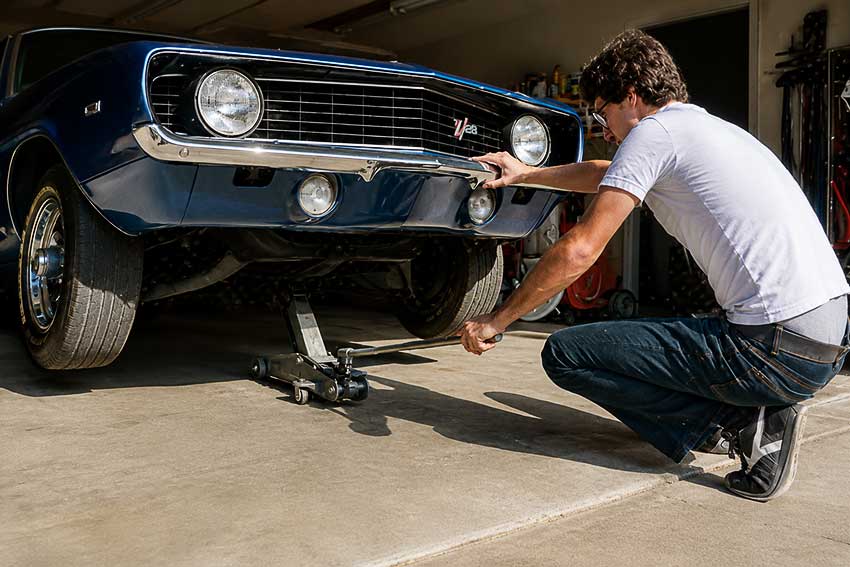
Front end components take a terrible beating. Consi­dering highway conditions - pot holes, rough rail­road crossings, speed bumps, driveway dips, high­way imperfections - it's miraculous that so many older cars are still roaming the roads on their original front end parts. Ball joints and bushings in particular absorb tremen­dous punishment because they connect the spindles to the con­trol arms and the control arms to the chassis, respectively, ac­tually supporting much of the Camaro's weight as the wheels and tires bounce over highway hazards. But although Camaro front ends have survived the mileage and the years, the damage of time and use eventually takes its toll, usually surfacing as tell-tale pops and squeaks before advancing to the dangerous level. 

Restoring a 1969 Z/28 Camaro: Chapter 3 Panel Replacement


After dismantling the Camaro, the restoration pro­ject can progress in a number of different direc­tions. If you intend to rebuild the engine yourself (more on engine rebuilding in a later chapter), dis­assemble the engine and send the block, crank, heads, etc. to a reputable machine shop for boring, polishing, valve work, bal­ancing, or whatever. That way, when you're ready to proceed with the engine rebuilding at a later stage of the restoration, all of the necessary components will be refinished and ready for reassembly.

Restoring a 1969 Z/28 Camaro: Chapter 2B - Taking Apart the Exterior

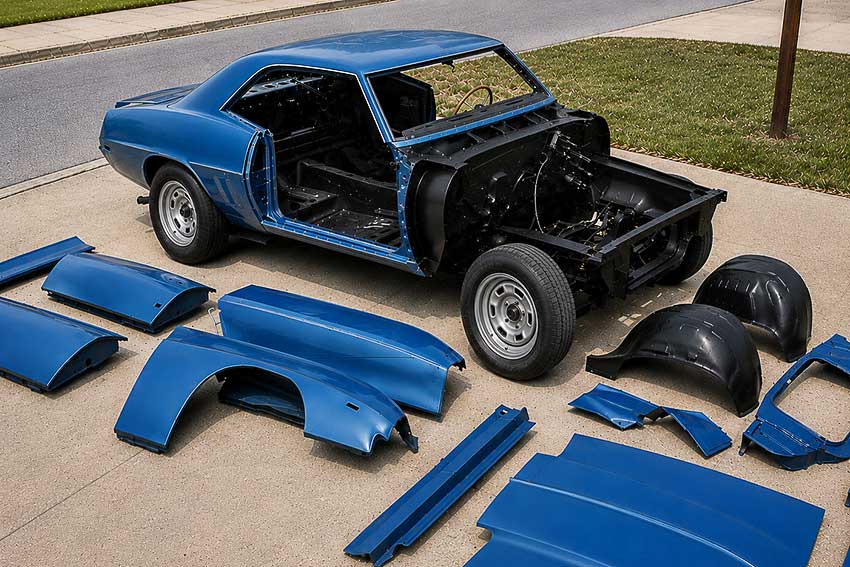
Taking apart our 1969 Camaro Z/28's exterior body panels is a tad more challenging than removing her interior. Still, we were up for the challenge, as you can see from the lead photo. Our Z/28 looks like a full-size scale model, with the exterior items all laid out as if they'd just been removed from one of those plastic scale car model trees. Follow along with the step-by-step guide, so you can get your Camaro looking like a full-size scale model like ours!

Restoring a 1969 Z/28 Camaro: Chapter 2 - Disassembly of the Interior

This is the fun part. Taking a Camaro apart requires no special skills; almost anyone can do it, even a novice mechanic. But a little pre-restoration planning will lessen the problems and headaches that can accompany a disorganized Camaro Project.

Top 10 Restoration Mistakes on the First-Generation 1965–73 Ford Mustang

Restoring a classic Mustang from the first generation (1965 - 1973) is both a rewarding journey and a technical challenge. These cars - ranging from early 1965 models to the muscular 1973 fastbacks - are classics of American automotive history. However, many restorers fall into common traps that undermine both the integrity and value of the final build.

Whether you're tackling a numbers-matching 1966 GT coupe or a 1970 Boss 302, here's a thorough guide to the 10 most common and costly restoration mistakes, complete with historical context and technical insight.

Under Control: All Chevy Performance's 1971 Camaro Project

Power is nothing without control — this old saying certainly rings true when it comes to working on cars. Our friends at All Chevy Performance already handled the power aspect of their 1971 Camaro project by installing a modern GM 5.3L LC9 V8, but the control side of the equation still needed to be addressed. This led them to update the Camaro's steering, pedals, and shifter so it'll be able to turn, accelerate, stop, and change gears smoothly. We were happy to assist with some much-needed parts from the Classic Industries Camaro catalog.

Rattle No More - Increasing Second-Gen Camaro Cabin Comfort

There’s nothing worse than hitting the road in your high-performance Chevy and being assaulted by excess heat and vibration as you lay down the miles. Between adding an upgraded driveline and high-flow exhaust, the amount of heat generated has a direct connection through the floorpan.