


 This is the fun part. Taking a Camaro apart requires no special skills; almost anyone can do it, even a novice mechanic. But a little pre-restoration planning will lessen the problems and headaches that can accompany a disorganized Camaro Project.
Having Sufficient Work Space & Storage Space

Above: Car placement in your shop or garage is critical. Allow plenty of space around the car for the movement of creepers, jacks, engine hoist, etc.
Sufficient work and storage space is a necessity; the disassembled parts will clutter a one-car garage in a hurry. Suspend a clothesline or rope across the garage or shop for hanging parts out of the way, and add a few more shelves beneath your workbench. Install a piece of heavy pegboard on an empty wall, and consider purchasing a metal storage shelf from a local hardware store. If you don't provide sufficient storage space, the removed components will pile up and you'll be playing hide-and-seek with Camaro parts during latter stages of the restoration.
 Left: When taking a Camaro apart, it's wise to store nuts, bolts and clips in containers. Use masking tape and a pen to mark the containers for easy identification during the car's reassembly.
Utilize small boxes, cans and bags for storing small items, and label each container with masking tape as you store parts in them. Clear sandwich bags work real good because you can see what's in them. Nuts, bolts, screws, clips and other fasteners should be stored together with their attaching parts. In other words, console screws should be stored with the console, bumper bolts with the bumpers, etc. In many cases, nuts and clips can be reattached to bolts and studs for storage and easy identification purposes. Loose nuts can be clustered together on wire.
While disassembling the Camaro, keep a pencil and notepad handy for listing needed parts and materials. If you make the list as you go, you won't have to sift through the parts later. When the disassembly is completed, you can refer to the list for ordering replacement parts. Which brings up another point: before diving into the restoration, order as many Camaro parts catalogs as you can. That way, when the disassembly is finished and your parts list is finalized, you can refer to the catalogs for availability, pricing, etc. As you order parts, mark them off your list to avoid duplicated orders.
 Right: After disassembling the Camaro, sit down with your parts list and Camaro parts catalogs and order the parts required for the restoration. If you order the parts quickly, they'll arrive before you need them, which keeps the restoration moving smoothly.
You'll need plenty of shop rags or other types of rags (old bathroom towels, shirts, pants, etc.) for wiping grease from parts and yourself. Keep a container of hand cleaner (Goop or one of the other brands) in the garage for cleaning your grimy hands before entering your house or everyday car. It goes without saying that you should wear old clothes or coveralls while disassembling the car.
If possible, steam clean the engine compartment and undercarriage before beginning the disassembly. A pressurized car wash works almost as well, especially if you apply a degreasing cleaner, such as Gunk, first and allow it to soak into the grease and grime for about 30 minutes before hosing it off with the water wand. By cleaning the typically nasty areas before taking the car apart, you 'II keep yourself cleaner when you get down to the nitty-gritty disassembly.
Preparation
Placement of the Camaro in your shop or garage is critical. Ideally, the work area will provide ample working room on each side of the car - be sure to consider movement of creepers, engine hoist, jacks, etc. With the Camaro in position, use a hydraulic floor jack (rented or purchased -good heavyduty jacks sell for around $90) to raise the car approximately two feet off the garage floor (measured from the floorpan) and support with four heavy jack stands. Of course, raising the car and placing it on stands can be delayed until a later stage of the disassembly. In fact, if you decide to disassemble the interior first, it would be best to keep the car low for access reasons.
Disassembly can begin at any of the five major areas (interior, exterior, engine compartment, trunk, undercarriage). However, it's best to disassemble one section completely before moving on to the next because it's important to keep the parts together.

Above: 1) Begin the disassembly by removing the front seats to provide easy access to the rest of the interior. Remove the four bolts that secure the seat tracks to the floorpan. 2) With the seat track attaching bolts removed, you can lift the seats out of the interior. Store the seats in a safe location to await the future installation of new upholstery.
On our project Z/28, we disassembled the interior first, moving next to the exterior, then the trunk, engine area and undercarriage. Finally, we disconnected the front subframe from the body for thorough cleaning and repainting. Working steadily, and taking time to label parts and store fasteners correctly, we disassembled our Camaro in two days. Then we scrutinized the parts-needed list and began ordering replacement pieces from Camaro parts vendors and our local Chevrolet parts department. By the time we finished cleaning reusable components and rebuilding the engine, most of the parts had arrived and were awaiting reassembly. Once the Camaro is positioned in your shop or garage, disconnect the battery, grab your tools and get to work. Ready, set, go.

Above: 3) To remove the console (if equipped), lift off the shifter plate after removing the four screws located at each corner. 4) After lifting off the shifter plate, remove the bolts that secure the console to the transmission tunnel.

Above: Another bolt, located beneath the ash tray, secures the rear of the console. 6) Here's the tricky part. A pair of console nuts must be removed from under the car. They're hard to reach, located just above the transmission. For easier access, raise the car first.

Above: 7) With the attaching bolts and nuts removed, lift the console over the shifter and flip it over to disconnect the gauge wiring and oil pressure line. 8) Use a tube wrench to disconnect the oil pressure line from the oil pressure gauge. Be sure to plug the line if you plan to restart the engine!

Above: 9) Remove the seat belt attaching bolts and remove the front seat belts. 10) The rear seat simply pops out by pushing inward and lifting up simultaneously.

Above: 11) Remove the pair of bolts that secure the rear seat back to the floorpan, then lift the seat back to remove it from the interior. 12) With the rear seat out of the way, remove the rear seat belts.

Above: 13) Pull out the old package tray. Our project Camaro, like so many other Camaros out there, had previously received a pair of aftermarket speakers mounted in the package tray. We'll replace this one with a new package tray from one of the Camaro vendors. Be sure to write it down on your parts list. 14) Lift out the cardboard liner that separates the interior from the trunk compartment. If the liner is ripped and torn, discard it. Reproduction liners are available.

Above: 15) Remove the window handles and lift out the rear panels. The panels will be replaced during the interior restoration, but save the old panels because you'll need the metal sections. 16) On standard interior Camaros, remove the arm rests on each door panel.

Above: 17) With the arm rest off, the door handle can be removed by pulling out the attaching clip. Fabricate a homemade hook from a piece of metal for easy clip removal. Replace the clip on the handle for storage. 18) After removing the window crank screws handle, the door lock knob, and a series of screws along the bottom of the panel, grab the rear of the door panel and carefully pull the panel away from the door. Don't lose or damage the attaching clips; they must be transferred to the new door panels during reassembly. Also, hold on to the old door panels because the metal sections must be swapped to the new door panels.

Above: 19) Remove the door sill plates and discard if you plan to replace them. 20) Pull out the old carpet and throw it away. New carpet is a must for any full Camaro restoration.

Above: 21) Moving to the instrument panel, remove the radio and other dash components, like knobs and switches. 22) On our project car, the original radio had been replaced by an aftermarket AM/FM unit, but luckily we found the original AM radio stashed in the trunk. We were also fortunate because the plastic instrument panel had not been butchered, but unfortunately part of the plastic around the radio control knob had broken off. New instrument panels are not available, so we'll either repair the old one or try to locate a salvageable panel from a wrecking yard or parts car.

Above: 23) The instrument panel crash pad comes out next. First, remove the attaching screws at each end. 24) To reach the row of crash pad nuts above the glove box, remove the glove box screws and slide the cardboard box out of the dash opening.

Above: 25) Reach through the glove box opening and remove the crash pad nuts, then slip the crash pad off the instrument panel. 26) Here's a close look at the crash pad studs. You can't see them when the crash pad is in place on the instrument panel.

Above: 27) Finish stripping the instrument panel, removing the plastic instrument panel, pedal assembly, steering wheel, steering column, and wiring harness. 28) Use a pair of needle nose pliers to pull out the door weatherstrip clips. Peel the weatherstrip away from the door and discard.
Interior Empty - Move On To the Exterior (Part B)
That's enough demolition detail for the time being. In Part B of this Camaro disassembly chapter/article, the exterior of our 1969 Z/28 Camaro will be all taken apart. Stay tuned for the next episode of Camaro deconstruction and eventual renovation on the Classic Industries website - same place, same or different time. If you worked as hard and smart as us, you've earned some relaxation time.
Classic Industries - Your Source for Camaro Components
Classic Industries welcomes the opportunity to help you find your restoration, performance parts, and accessories for your Chevrolet Camaro in the here and now and into the future! Click the button below for a free Chevrolet Camaro Parts and Accessories Catalog.

Classic Industries Also Offers a Digital Camaro Catalog

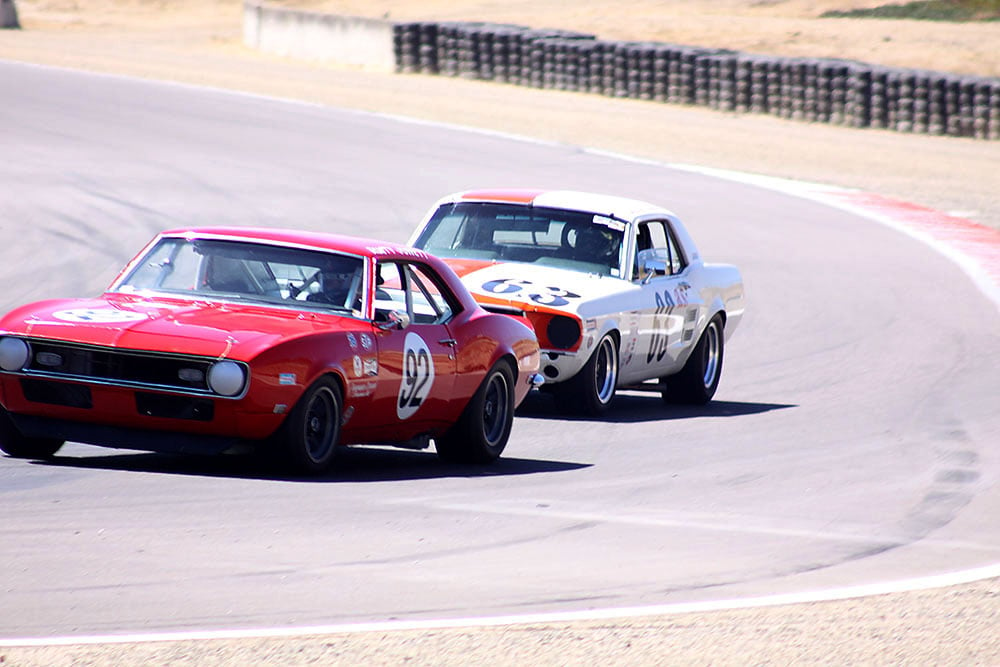
Above: Famous F1 driving champions Jenson Button and Patrick Long shared driving duties with the #2 clad 1977 IROC Chevrolet Camaro, owned by William Warner - IROC down the cork in the Unser Family Cup! This photo was taken at the Rolex Monterey Motorsports Reunion at WeatherTech Raceway Laguna Seca 2025 (last two racing photos courtesy of the humble scribe, aka D. Brian Smith).
While the printed Camaro catalog remains a popular choice among restorers, the digital version adds a layer of convenience and interactivity that’s perfect for today’s fast-paced workflows.

Learn More About Camaro History
Would you like to read more about GM's Camaro? Check out our previous articles below:
- Camaro History - More than 50 Years of Iconic Design
- 1967-2002 Camaro Production Numbers: First-Gen to Fourth-Gen
- DIY: How to Replace Camaro / Firebird Window Felts
- 1970-1981 2nd Gen Camaro - A European/American Styling Tour de Force
- Videos: Restoration v Restomod: Battling for the 1967-1981 Camaro’s Soul
- Top 10 Mistakes to Avoid When Restoring a 1967–1969 Camaro