



After dismantling the Camaro, the restoration project can progress in a number of different directions. If you intend to rebuild the engine yourself (more on engine rebuilding in a later chapter), disassemble the engine and send the block, crank, heads, etc. to a reputable machine shop for boring, polishing, valve work, balancing, or whatever. That way, when you're ready to proceed with the engine rebuilding at a later stage of the restoration, all of the necessary components will be refinished and ready for reassembly.

Above: At some point in the distant past, a previous owner of our project Camaro had replaced the original right rear quarter panel with a used panel. Notice the pop-rivets and the layer of plastic body filler.
Or, if you're farming the engine work out to a shop, load up the engine and deliver it to your mechanic right away so it will be back together when the time comes to install the rebuilt engine in the restored Camaro. When you're almost finished with your restoration project, the last thing you need is a delay. Likewise, other components that require rebuilding or refinishing (transmission, seat upholstery, etc.) by an outside source should be sent out to their respective shops. In the latter stages of the restoration, when you're eager to complete the project and get it on the road, nothing is more discouraging than sitting around idle while you wait for farmed-out work to be completed.
Another way to avoid delays is to sit down with your parts list (you did make a parts list while you were taking the car apart, didn't you?) and order all the parts you need for the restoration. Of course, as the project progresses, you'll stumble across other necessary items, but by ordering as many parts as possible as soon as possible, the influx of new or reproduction pieces will keep your restoration moving smoothly.

Above: Even when positioned over the old panel, the new quarter panel obviously provides a good fit. As you can see, a replacement quarter panel includes the door post area as well as the roof pillar and trunk section. Quality is excellent.
At this writing, many Camaro replacement parts are not available from Chevrolet or the reproduction aftermarket, with the notable exception of Classic Industries. In those cases, try searching the local wrecking yards or, if that doesn't work, try contacting other Camaro enthusiasts who might have a parts car stashed in the backyard or a hoard of parts stored in the attic.
With the engine rebuild underway, the replacement parts ordered and the seats in the upholstery shop (unless you're replacing the upholstery yourself - see the interior chapter), you can dive into the body work segment of the restoration. Many Camaro restorers farm out the body and paint work, while still others perform the body work themselves before sending the car to a shop for the paint. How you tackle the body work and paint will depend upon your own prowess with body work.

Above: More evidence of hard use. Our Z/28 had been bumped hard in both rear corners and repaired with little bodywork and a lot of plastic body filler.
By now, most 1967-69 Camaros have barely survived a few winters and fender-benders, which means rust, wrecks, and illrepaired damage. Unless you luck onto a really nice example, you can expect to replace at least one or two body panels. If you live in a northern climate where salt is used to melt ice and snow, be prepared to replace or repair almost every panel in the car.
Fortunately, replacement sheetmetal is available for 1967-69 Camaros, both NOS from Chevrolet and from the reproduction aftermarket. Front fenders, doors, hoods, trunks, and valance panels are simple bolt-on replacement items, but other panels, such as rear quarters, floorpans, rocker panels, and rear panel, must be replaced by cutting out the old, damaged panels and welding in the new. You'll have to make a decision here: Do you send the Camaro to a body shop for the panel replacement work, or do you tackle the job in your home garage?
A full Camaro restoration takes you through several phases of work - engine rebuilding, interior upholstering, front end rebuilding, parts refinishing, and hundreds of other smaller details. Of all the work required in a restoration, body panel replacement is probably the toughest for the average owner to perform in his home garage or driveway. First, you need tools and equipment not usually found in the average home garage, things like an acetylene torch, air chisel (which requires an air compressor), body clamps, grinder, etc. Of course, these tools can be rented, but when you get them, do you know how to use them? If not, you may want to enroll in a body shop class at a nearby technical school. Also, welding is an important part of panel replacement, so a welding class may be in order too. Don't try welding without proper instruction.

Above: The reproduction rear quarter patch panel, we discovered, was of poor quality, requiring extra body work to make it look and fit acceptably. If your restoration budget can afford it, we recommend going with brand new rear quarter panels.
Thanks to numerous repaints, our project Z/28 Camaro was coated with several layers of paint, so stripping became an evil necessity. As a rule, a car should be stripped before a third repaint. To be more precise, measure the paint thickness with a "paint thickness meter," which works on a magnetic principle - the magnetic force decreases with the thickness of the paint. Measured in "mils," the paint gets thicker with each repaint. At ten to twelve mils of thickness, the car should be stripped. Under ten mils, and you can simply sand the car and spray new paint.
There are several methods of paint stripping, and all have their benefits and drawbacks. Chemical dipping is by far the best and most thorough method of stripping a car because the caustic solution removes anything and everything, including grease and rust. As a result, you end up with absolutely clean sheetmetal, just like brand new and ready for paint. However, the strong solution is harmful to rubber and plastic, so before dipping a car, you must remove all the weatherstripping, wiring, rubber plugs, plastic bushings, etc. to prevent damage.

Above: New quarter panels eliminate guesswork. Stamped by the original factory die, all the creases and folds are present and are in the right places.
Of course, chemical stripping by one of the commercial strippers adds additional costs to an already expensive restoration, so you may opt for the cheaper way out - stripping the car yourself. Stripping the Camaro by hand will get the job done, but not as thoroughly as a commercial stripper. On the plus side, the car does not have to be completely dismantled since you'll only strip the exterior paint. But be forewarned: stripping by hand is a messy and tedious job. After brushing the stripping solution onto the paint surface, wait until the paint blisters and then scrape the loose paint off with a paint scraper. Several coats of stripper may be necessary, depending upon the thickness of the paint. Also, be sure to follow the directions on the stripper label; chemical strippers can be dangerous if not used correctly.
Sandblasting is another stripping alternative. It's definitely easier than stripping the paint by hand with a chemical stripper, but you'll need an air compressor and sandblaster, which you should have anyway if you're tackling a restoration. Unfortunately, the siphon-fed models that sell for under $100 work real well on small parts but they usually can't handle the demand of stripping paint and rust from a car body, especially if the paint is thick. You may want to take the car body, along with the doors, fenders, and any other metal parts that need stripping, to a professional sandblasting service. Of course, after sandblasting, the car will be filled with sand. If you don't clean the car out thoroughly, by rinsing or vacuuming, or both, you'll find sand floating throughout the restored car for the next several years.

Above: This trunk compartment lip is not part of the new quarter panel, so it must be carefully removed and replaced because it is no longer available.
After stripping the paint from our project Camaro, we were able to scrutinize the car closely for previous damage. And we found a lot. The passenger side rear quarter panel had been replaced years ago, and the replacement panel contained-numerous dents that were filled with plastic body filler (popularly known as bondo). In particular, the lower rear corner had suffered the most damage. On the opposite side, the rear quarter sheetmetal was still original, but the panel was wrinkled beyond repair. To bring the rear body back up to snuff, we ordered a reproduction patch panel for the driver's side, along with a rear panel to replace the dented and warped original rear panel.
When the parts arrived, however, we were not satisfied with the quality of the reproduction patch panel, so we traded it in for a full-size quarter panel. Patch panels cover only the side of the rear quarter, but the full quarter panels include the top of the panel and the roof pillar, just like the originals. The full quarter panels cost more, but they're definitely worth the extra cash outlay.

Above: The new rear panel featured superb quality, plus all the correct holes were drilled in the correct places, simplifying the installation.
Installation of the quarter panels and the rear panel is straight forward. You'll need basic body repair tools, plus the previously mentioned acetylene torch and welder. Before cutting out the old panels, familiarize yourself with the new panels and how they fit. Then cut through the old panels at their seams, being careful not to cut into the surrounding good metal. Once the old panels are removed, it's a good time to apply undercoating to all the normally hidden areas. Clamp the new panels into position, checking carefully for correct alignment, and weld them permanently into place. Seal all seams to prevent water leakage into the trunk and passenger compartment.
After welding in the new panels and sealing the seams, fill and smooth the seams with body filler or lead (your choice), then apply a coat of primer. By fine sanding the primer, the smallest imperfections will show. Add more filler and primer, and repeat the process until all the imperfections are eliminated and the finish is smooth. Remember to allow each coat of primer to dry completely before sanding. By using generous amounts of patience, you'll obtain a smooth, glass-like finish ready for final prep and painting.
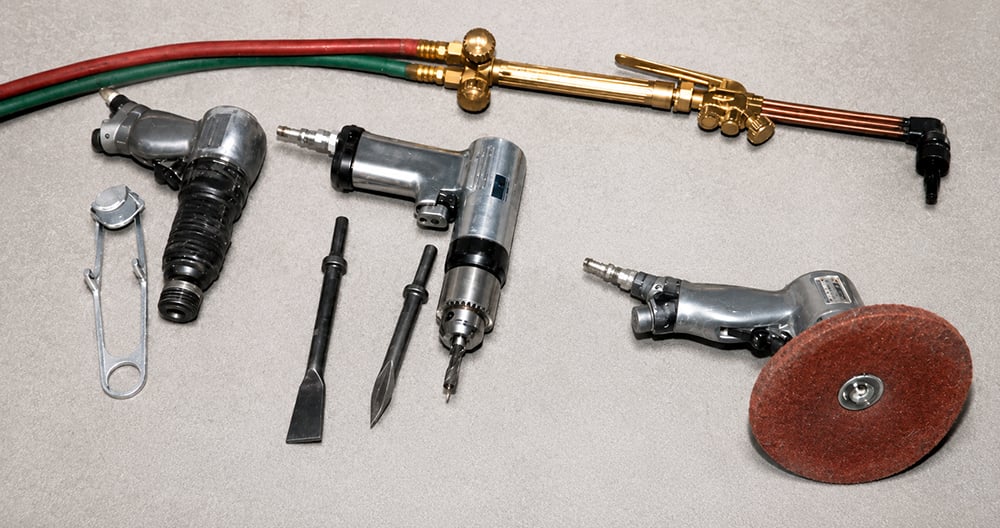
Above: To replace rear quarters and other body panels yourself in your home garage, you'll need an assortment of tools not usually found in the home, including an acetylene torch, grinder, and power cutters.

Above: 1) To remove the old quarter panel, first melt the original factory lead tiller from the roof seam. The melting point for the lead is very low, so it melts quite easily under a torch set for low heat. Be careful not to overheat the metal or you could warp the roof panel. 2) As the lead melts off, you can see the original factory seam.
Above: 3) After melting the lead filler, use a hack saw to separate the three panels that join where the quarter panel seams enter the window area. 4) Once the initial cut is made, use a chisel to separate the quarter panel from the roof panel.

Above: 5) Utilize the hack saw again when starting the cut inside the trunk compartment. By using a hack saw, you protect the good metal near the seam. Then complete the separation with a chisel. 6) With the chisel (an air chisel is shown), carefully separate the remaining quarter panel seams. Be sure to leave enough metal for cutting and trimming during the installation of the new panel.

Above: 7) When separating the quarter panel from the rear panel, be careful not to harm the trunk lip. 8) Cut the wheel opening above the seam with an air-powered sheetmetal trimmer. The remaining metal can be cut off later.

Above: 9) Separate the quarter panel at the door post with a flat chisel. 10) With all the rough cuts completed, the old quarter panel can be lifted away from the car. Flip the panel upside-down and remove the trunk lip.

Above: 11) With the old quarter panel out of the way, you can make needed repairs to the sheetmetal underneath. 12) To locate the rear panel seams, use a grinder to clean away old sealer.

Above: 13) Remove the fuel tank (if you haven't already) and cut the rear panel loose using either a chisel or the faster acetylene torch. 14) Use a chisel to cut the spot welds that attach the trunk latch support to the rear panel.

Above: 15) The chisel can also be used to separate the lower section of the rear panel from the trunk floor. 16) After lifting the rear panel away from the car, you'll probably have to do a lot of straightening before the new panel can be installed.

Above: 17) Use a hammer and dolly to straighten the edges of the trunk floor. 18) If you're replacing only one rear quarter panel, these quarter panel seams on the remaining side must be taken apart a little at a time to prevent damage to good metal.

Above: 19) After completing the inside repairs and straightening edges, clamp the new panels into place for a preliminary fit. All seams should be smooth and tight before welding.

Above: 20) On a Camaro, a good fit where the trunk, quarter panel, and filler panel meet is important. A bad fit will be very obvious after the car is painted, but by then it's too late. 21) When satisfied with the fit, pull the quarter panel off and spot weld the door striker plate to the new quarter panel. Then reposition the quarter panel in place.

Above: 22) Stitch the roof line securely in place with gas welds about 2.5- to 3-inches apart. Allow each weld to cool before moving to the next one. 23) Spot weld wherever possible. If you don't have access to a spot welder, a gas welder will suffice.

Above: 24) A spot welder heats the metal in one spot to its melting point. Then the metal from the two joining sections flows together to form a permanent bond upon cooling.

Above: With the rear quarter panel welded into place, move to the rear panel and weld it securely.

Above: 26) Sandblast the roof seam welds to assist body filler adhesion. 27) Apply the body filler, then block sand to achieve a smooth and neat finish prior to painting. Stay tuned for Chapter 4, where we'll be replacing our Camaro's front end, same Classic Industries time (or perhaps a different time depending upon your schedule), same location!
Classic Industries - Your Top Choice for Finding Chevrolet Camaro Components
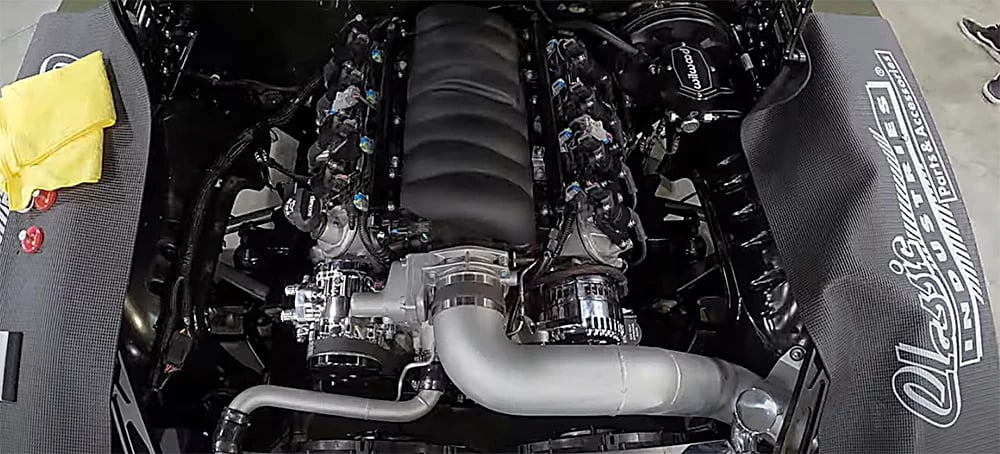
Restoring a 1967–1969 Camaro is both an art and a science. It takes patience, research, and a long-term vision. Avoiding the most common mistakes, especially when it comes to planning, parts, and prioritizing quality, can save you thousands and protect the value of your classic. Whether you’re building a daily cruiser, a show car, or a pro-touring beast, staying informed, and methodical will set your restoration up for success.
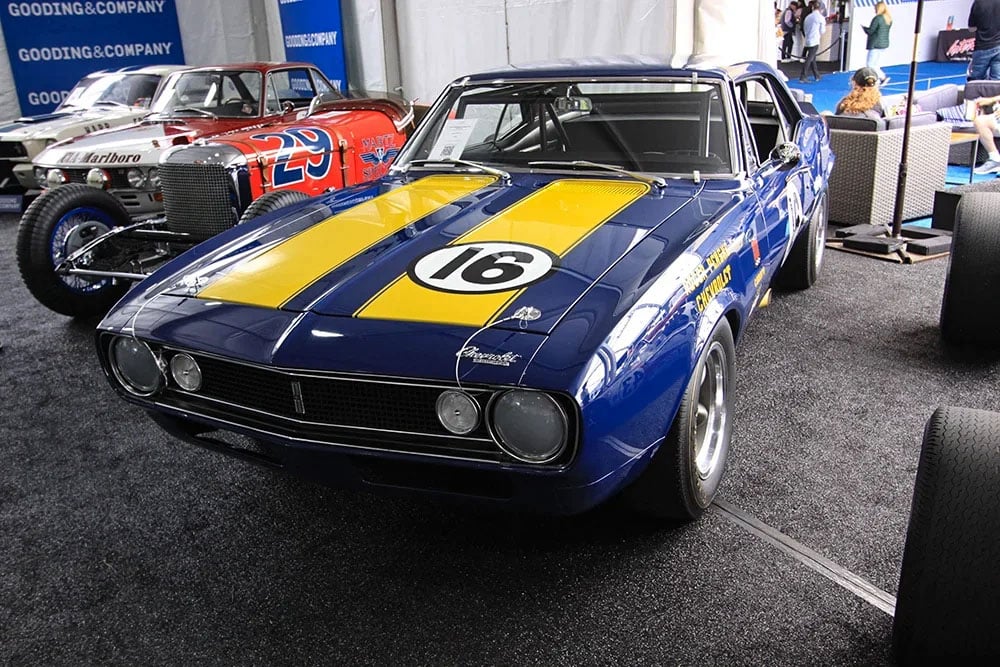
Above: 1967 Penske Racing Camaro Z/28 Trans Am racecar (#16), photographed at the Gooding & Company Pebble Beach Concours d'Elegance Auction a few years ago (photo courtesy of the humble scribe and creator of montereycarweek.net)
Treat the process like a journey rather than a sprint. In the end, nothing compares to the satisfaction of bringing a legendary Camaro back to life - one bolt, weld, and coat of paint at a time. Get the Camaro parts you need from the company that came into existence some 50+ years ago as Classic Camaro, and you'll be off to the races. You can search for Camaro parts online. You can also enhance your search for those must have Camaro components by obtaining a free 600+ page Camaro Parts and Accessories catalog. You can also search for parts in the new digital Camaro Parts and Accessories catalog.