

For Corvette enthusiasts, the name ZR1 means one thing and one thing only: the pinnacle of performance. Ever since the introduction of this racing-oriented option package in the 1970 model year, the Corvette ZR1 has been a car that raises eyebrows everywhere it goes — not just in America, but all over the world. It showed the automotive industry the best of what GM engineers had to offer, and in true "halo car" fashion, it was so expensive to produce that it constantly made the bean counters upset. More than 50 years since its launch, it's still surprising competitors and breaking records. Read on as we take a look back at ZR1 history and study every generation of the ultimate Corvette variant.
Photos courtesy of Mecum Auctions
1970-72 C3 Corvette ZR1 & ZR2

By the late 1960s, General Motors was aware that a subset of the market always wanted more horsepower and was willing to pay almost anything to get it. For example, most buyers were happy with a regular 1969 Camaro SS, but a select few used the COPO Camaro program to special-order cars with the monstrous 427ci V8. That option wasn't advertised to the general public, but if you knew who to ask, you could get a very special (and very fast) '69 Camaro using RPO code ZL1.

At the start of the 1970 model year, GM began offering a similar special-order racing package for the C3 Corvette. Buyers who requested RPO code ZR1 — which was never advertised to the public — were charged an additional $1,221 on top of the price of a standard Corvette with the LT1 engine. The ZR1 package was a hardcore track-oriented setup for road racing and autocross competitors, so selecting it automatically eliminated luxuries such as power windows, power steering, A/C, and a radio.

Instead of creature comforts, the ZR1 came with a 370-horsepower solid-lifter 350ci LT1 engine, Muncie "rock crusher" four-speed manual transmission, aluminum radiator, power brakes, and stiffer suspension (springs, shocks, and sway bars). It didn't have any ZR1 emblems or unique bodywork, so it looked just like an ordinary Corvette. Since this was an extremely secretive option, only 53 Corvette ZR1s were built between 1970 and 1972.

As a one-year-only option, GM also offered the Corvette ZR2 in 1971 with an even more potent 454ci V8. Only 12 ZR2s were ever built. Read our article about the Corvette ZR2 for details.
1990-95 C4 Corvette ZR1

After the original C3 Corvette ZR1 was discontinued as a result of rising fuel costs and emissions restrictions, many enthusiasts figured it was gone for good. Thankfully, it would make a comeback 20 years later during the C4 generation. The 1990 Corvette ZR1 took the high performance formula even further, offering a unique aluminum V8 engine, high-tech active suspension, and performance figures that left Porsche and Ferrari sweating bullets.

The C4 ZR1 was powered by a 5.7L aluminum block V8 that was developed in conjunction with the British sports car legends at Lotus. It featured four overhead camshafts, 32 valves, and an active air management system that shut off half of the 16 intake runners and fuel injectors until they were needed. This allowed the C4 ZR1 to produce 375 horsepower and some superb performance figures for its day:
- 0-60 in 4.5 seconds
- 1/4 mile in 12.8 seconds at 111mph
- 179mph top speed
This made it substantially faster than a Porsche 911 Turbo or Ferrari 348 at a fraction of the cost.

In addition to the engine, the C4 ZR1 had a unique ZF 6-speed manual transmission, large ventilated disc brakes, and massive 315/35ZR17 rear tires that were made specifically for the ZR1 by Goodyear. The FX3 active suspension was developed by Bilstein with input from Lotus's F1 team. It used computer controlled servos to adjust damping to match driving speed and conditions, much like the system Bilstein had previously designed for the Porsche 959 supercar.
Over the next few years of production, minor changes were implemented to bring horsepower up to 405 and torque to 385 lb-ft. Improvements to the base C4 Corvette and the development of the upcoming C5 eventually led GM to discontinue the C4 ZR1 at the end of 1995.
2009-13 C6 Corvette ZR1

Yet again, many years would go by before the ZR1 would reappear once more. Over a decade after the end of the C4 ZR1's production, rumors began circulating about a special Corvette code named "Blue Devil" that would have a factory supercharged V8. In 2007, leaked images would show this prototype, and Motor Trend magazine eventually confirmed that the "Blue Devil" project would become the C6 ZR1.

The C6 ZR1 featured a 6.2L LS9 V8 that produced 638hp and 604 lb-ft of torque. Initial magazine tests showed that the ZR1 could sprint from 0-60 in just 3.3 seconds and run the quarter mile in 11.2 seconds at 130 mph. This made it one of the fastest production cars in the world at the time, topped only by the likes of the million-dollar Ferrari Enzo and Bugatti Veyron.

The C6 Corvette ZR1 made extensive use of carbon fiber bodywork to minimize weight while maintaining rigidity. It also came with ultra-heat-resistant 15-inch carbon ceramic brakes with bright blue brake calipers behind 19- and 20-inch polished wheels. Much like the C4 ZR1, the C6 ZR1 used a cutting-edge form of adaptive suspension (Magnetic Selective Ride Control).
However, the C6 ZR1 was also a bit more highway-friendly than previous generations. It came with climate control, satellite radio, and more electronic assists. GM even offered a 3ZR package that added a Bose sound system, navigation, and a leather dash wrap.
2019 C7 Corvette ZR1

In some ways, the C7 ZR1 returned to its roots from way back in 1970. It was more aggressive, more track focused, and more limited in terms of production. GM built 2,953 of these cars for a single model year, down from 4,684 C6 ZR1s. It served as the ultimate send-off for the C7 generation.

Above: This 2019 ZR1 includes the optional ZTK track package with a higher rear wing, carbon fiber front splitter extensions, and sticky Michelin Pilot Sport Cup tires.
The C7 ZR1 was powered by a new 6.2L LT5 V8 — a throwback to the engine designation of the original 1970 ZR1. It was only offered in this car and came with a 2.6L Eaton supercharger and beefed-up fuel injection system. The combination produced 755hp and 715 lb-ft of torque, which Motor Trend called "a take-no-prisoners package that rivals the Millennium Falcon in hyperspace jumping capability." The engine was paired with either a 7-speed manual or an 8-speed automatic transmission.

The ZR1 also came with a large intercooler and auxiliary radiators to keep temperatures down during long sessions on the race track. The aerodynamics package was developed in collaboration with the Pratt & Miller Corvette racing team. It includes a huge rear wing, front splitter, and underbody diffuser.
2025-Present C8 Corvette ZR1 & ZR1X

GM made history with the debut of the mid-engine C8 Corvette, a racing-friendly configuration that had been rumored by enthusiasts for decades. Unsurprisingly, they decided the C8 deserved a top-shelf ZR1 package as well. It debuted in mid-2024 for the 2025 model year.

The C8 ZR1 features the most powerful V8 ever produced by GM, the 5.5L twin-turbo LT7 that produces a staggering 1,064hp and 828 lb-ft of torque through an 8-speed dual clutch transmission. This results in some truly insane performance:
- 0-60 in 2.3 seconds
- 1/4 mile in 9.6 seconds at 152mph
- Top speed of 233mph

Above: Compared to the simple carbureted V8 in the 1970 ZR1, the ZR1X's engine bay looks like something out of a space ship.
GM engineers decided to take the ZR1 even further by combining the LT7 V8 with the all-wheel-drive hybrid system from the Corvette E-Ray, producing a mind-boggling 1,250hp. The result was dubbed the ZR1X. Its enhanced aero and massive carbon ceramic brakes with 10-piston calipers complement the immense power, and helped put it neck-and-neck with the Mustang GTD as the fastest American cars around Germany's famed Nurburgring.
The ZR1 and ZR1X are both still available at the time of writing this article. The ZR1 has come an extremely long way from its origin as a secret RPO code in 1970, and we can't wait to see where General Motors takes it in the future!

For more information on the history of the Corvette, check out our previous article:
Looking for Corvette Parts?
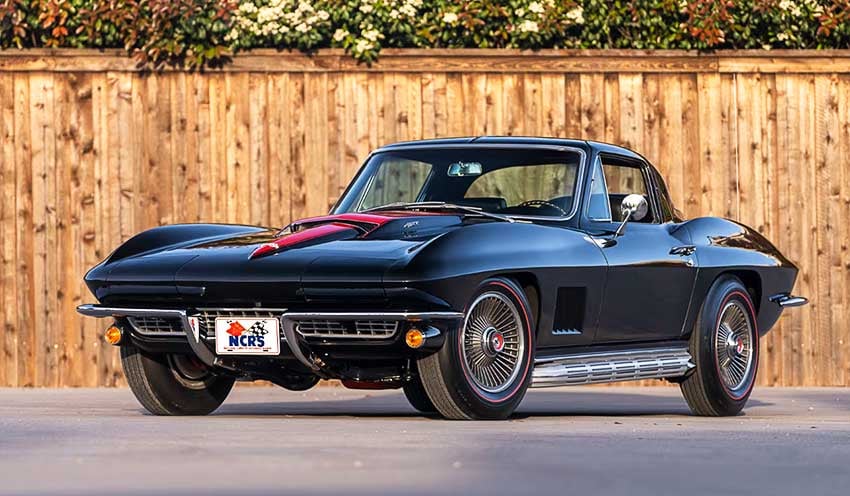
Classic Industries is the leading source for Chevrolet Corvette parts, whether you're restoring your car to original spec or building a high-horsepower track machine. Our catalog contains thousands of parts and accessories for 1953 through 2013 models. Click the button below to view our Corvette parts selection now: