
Some cars are engineered. A rare few are conjured. In 1967, when Ford widened the Mustang just enough to swallow its muscular 390/320-horsepower big-block, the move cracked open a door. Carroll Shelby, eternal hot-rod alchemist, kicked the slightly ajar door off its hinges. The GT500 arrived as the natural evolution of performance, its Police Interceptor 428 already massaged to 355 horsepower. The public devoured it, outselling the GT350 by nearly double. But beneath Shelby’s trademark Texas grin, another idea was forming - larger, louder, and impossibly ambitious.
And as in so many moments of automotive destiny, it took only a spark to ignite a legend.
A Tire Test Becomes a Moonshot

Early ’67 found Shelby wearing several hats. One of them was West Coast distributor for Goodyear. The tire giant asked him to flog their new Thunderbolt economy tire in a high-speed endurance test on their five-mile proving ground in San Angelo, Texas. To most, the assignment called for a mild-mannered test mule. To Shelby, it called for the next chapter in the saga he’d been writing since the Cobra first breathed fire.
The spark came courtesy of Don McCain, former Shelby American sales manager, then peddling horsepower for Dana Chevrolet and Mel Burns Ford. McCain proposed something outrageous even by Shelby standards: install a full-race 427 into a GT500 for the test, let him sell the prototype, and - if lightning struck - build 50 more.
Shelby didn’t merely approve.
He accelerated.
Video: Story of the 170 MPH '67 Shelby GT500 Super Snake
Engineering a Thunderbolt of a Different Kind
Fred Goodell, Shelby American’s chief engineer (and Ford’s trusted emissary), chose GT500 No. 544 as the foundation. But what emerged from the shop floor was scarcely a GT500 anymore.
Goodell explained calmly, as engineers do:
“We rebuilt it with a special lightweight 427 racing engine; special rear axle, special transmission and, of course, Thunderbolt tires.”
But the truth was even more intoxicating than the technical summary.
McCain remembered the engine with reverence reserved for saints and saints of speed:
“The mother of all 427s… aluminum heads, aluminum water pump, forged crank, Le Mans rods… everything inside built to run a sustained 6,000 RPM - to race at Le Mans.”
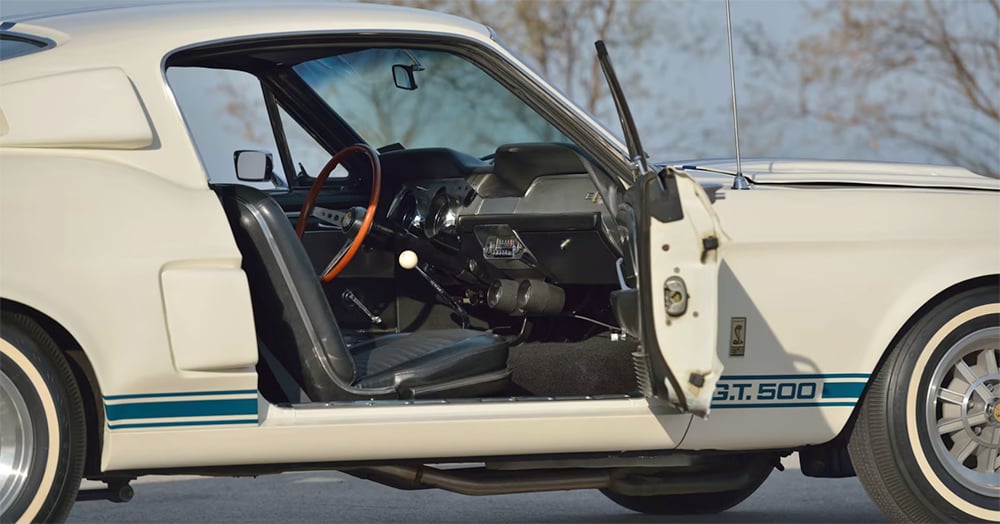
This was no warmed-over FE big-block. This was the GT40 MkII’s 600-horsepower Le Mans heart - repurposed for a production Mustang. The “bundle of snakes” exhaust snaked beneath the chassis, the symphony of eight cylinders exhaling in perfect, predatory harmony.
Supporting modifications completed the metamorphosis:
- External oil cooler, braided stainless lines, and remote mount filter for high-load durability
- Passenger-side heavy-duty springs and shocks to counter oval-track constant-G forces
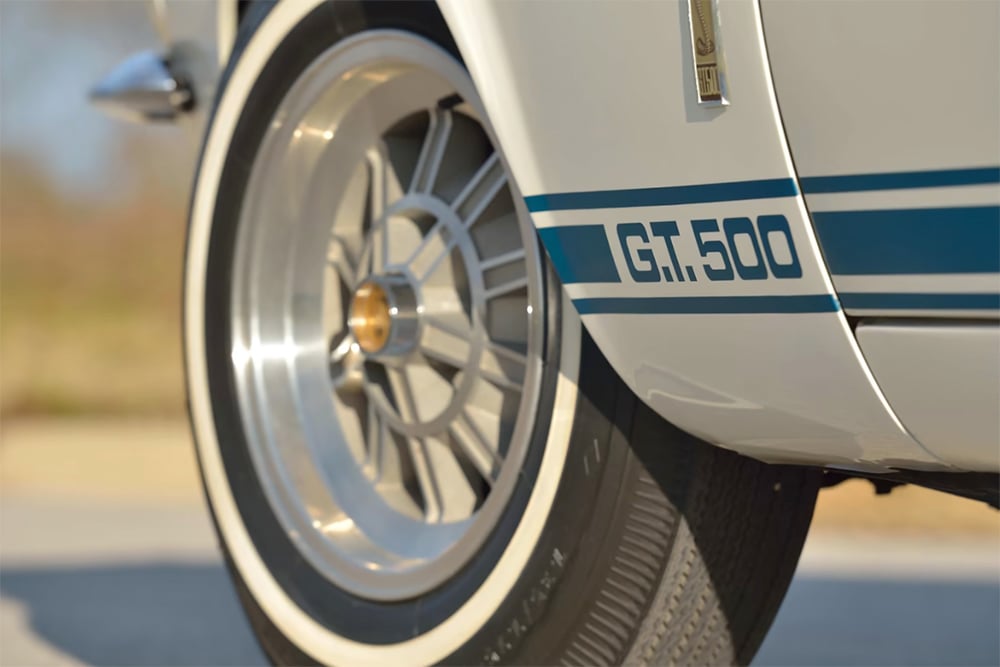
- Shelby 10-spokes shod in overinflated Goodyear Thunderbolt whitewalls, nitrogen-filled for thermal stability
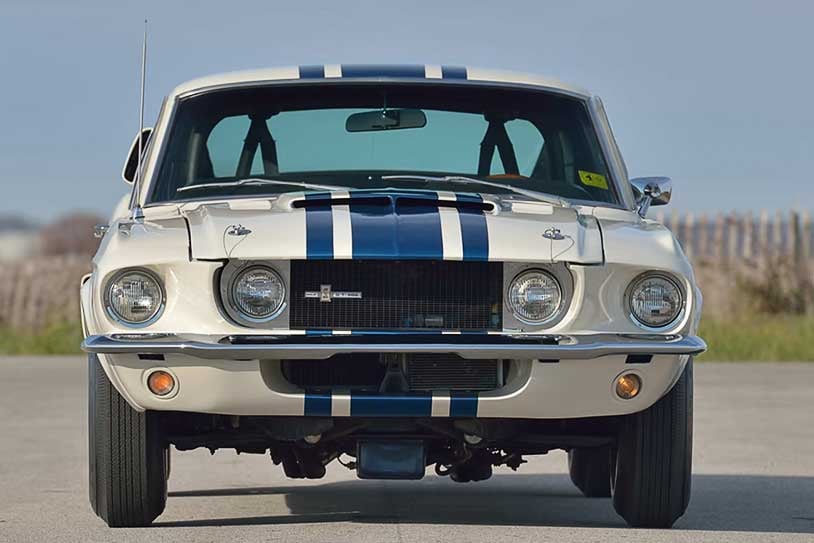
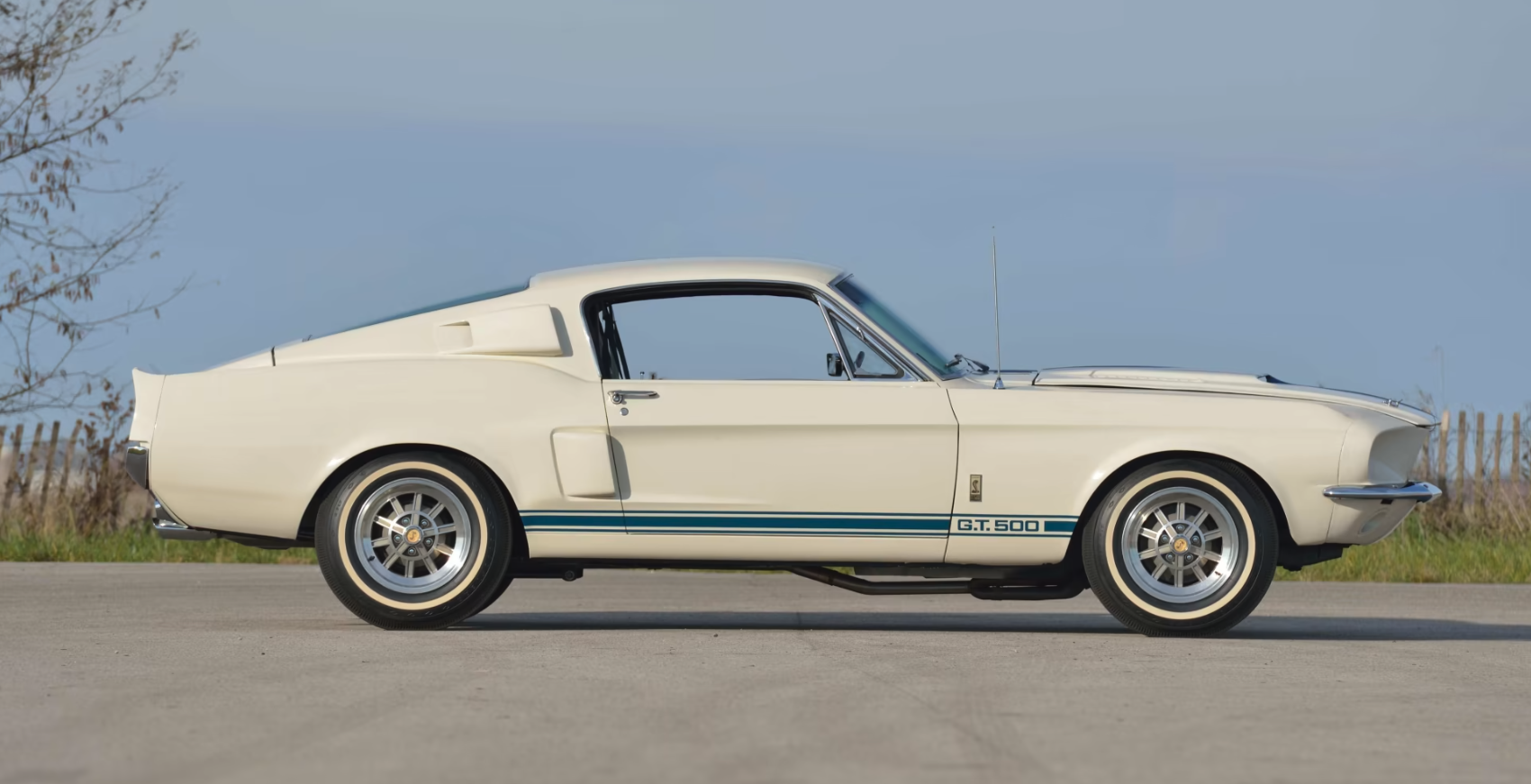
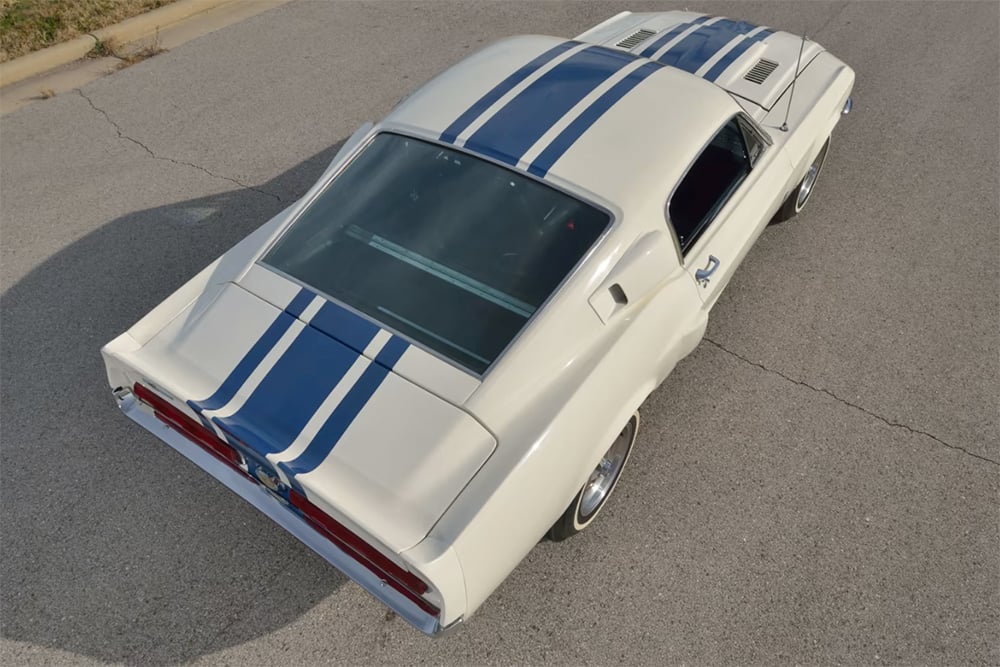
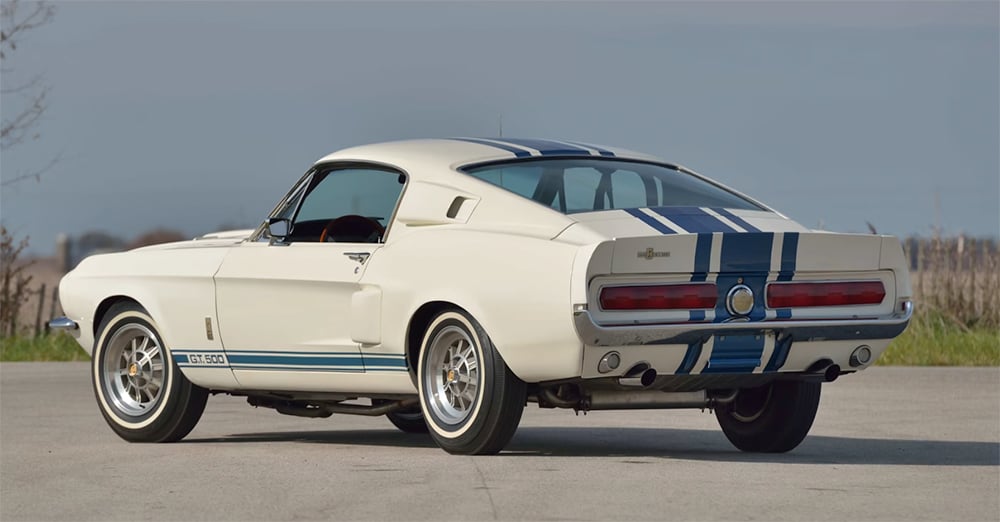
- One-off chrome headlight bezels and a unique Le Mans triple-stripe pattern—two narrow blues flanking one bold center band
GT500 No. 544 was becoming something Shelby never officially built again:
a big-block Mustang infused with the soul of a Le Mans champion.
Its name would be Super Snake.
Five Hundred Miles, One Hundred Forty-Two Miles Per Hour
The last week of March 1967, the Super Snake touched Texas soil. Journalists from Time, Life, and other national outlets climbed aboard for demonstration laps, during which Carroll Shelby himself wrung the car out to 150 mph. The Thunderbolts were thin, modest, almost comically narrow by performance standards. Yet, they held firm.
Then came the official test.
Myth long claimed that various drivers took stints, but Goodell eventually set the record straight on the TV show, My Classic Car. After the demos, Shelby handed him his helmet.
“I’ve got to go to Washington,” Shelby said. “You go ahead and drive the test.”
And so, Goodell did.
For 500 miles.
At an average speed of 142 mph.
With total tire wear of just 3 percent.
The Thunderbolts passed.
The Super Snake transcended.
The Supercar That Was Too Super
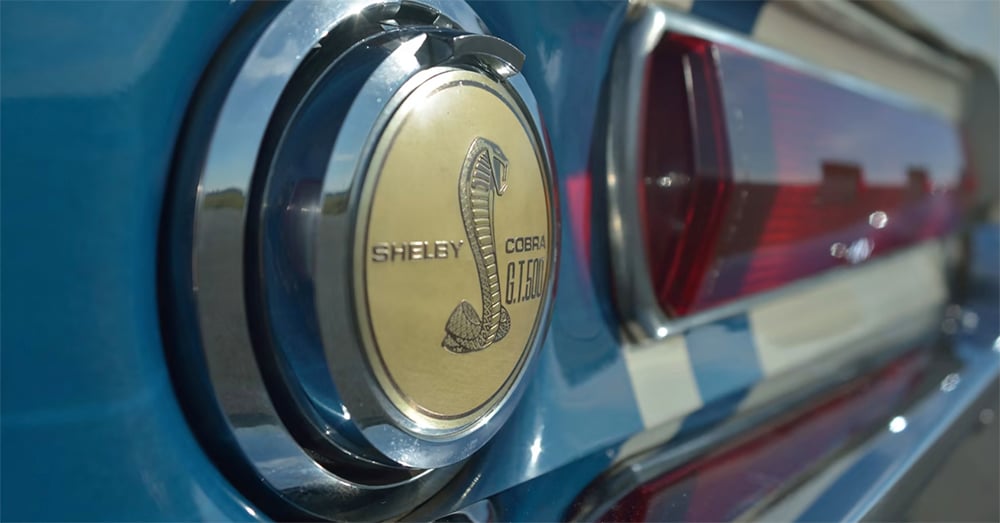
When the car returned to Mel Burns Ford in California, McCain attempted to generate interest in a 50-unit production run. The response was respectful admiration followed by sticker shock. The Super Snake cost more than double a baseline GT500, and even out-priced Shelby’s own 427 Cobra.
The verdict was unavoidable:
The world wasn’t ready.
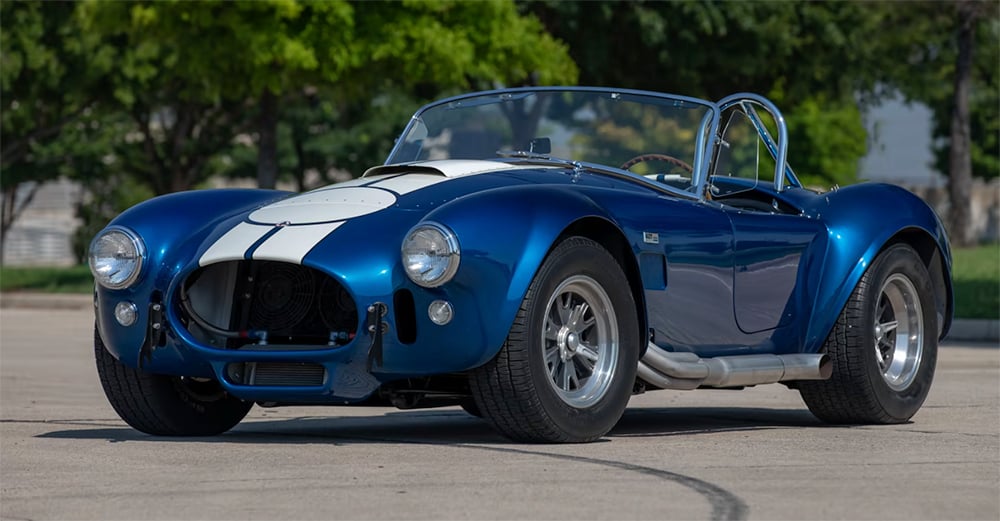
Above: 1967 Shelby Cobra 427 S/C - Semi Competition roadster specifications:
- CSX3045
- 1 of only 29 Semi Competition Cobras built
- Invoiced to Shelby American on February 23, 1965
- Completed to S/C specification under work order no. 15103 including modified race exhaust
- First Place in Competition Shelby Popular Vote at SAAC-5 in Dearborn, Michigan
- Extensive and exacting restoration completed by Robin Automotive in Northern California
- Inspection performed in 1994 by noted Cobra expert Dave Dralle of Redondo Beach California
- Gold Award at the 1998 SAAC Convention in Charlotte, North Carolina
- Best Cobra and Best Comp Cobra at the 1999 SAAC meet in Ann Arbor, Michigan
- 427/485 HP medium riser OHV V-8 engine
- Holley 4-barrel carburetor
- 4-speed manual transmission
- 4-wheel independent suspension with upper and lower a-arms and coil springs
- Koni tubular shock absorbers
- Girling 4-wheel disc brakes with alloy calipers
- Extensive history listed in the Shelby Registry
Instead, the lone prototype made its way to Dallas, purchased by Braniff International Airways pilots James Hadden and James Gorman, who installed 4.10 gears for quarter-mile thrills. Years later, Texas enthusiast Bobby Pierce preserved it for a quarter century, ensuring the car survived unmolested - and nearly mythic.
Resurfacing a Unicorn
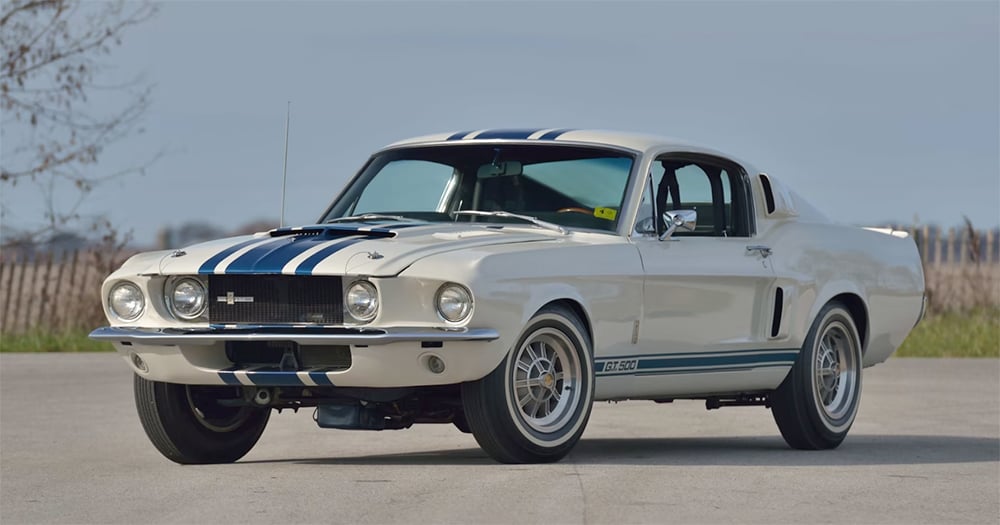
Above: 1967 Shelby GT500 Super Snake specifications:
- The one and only 1967 Shelby GT500 Super Snake
- GT40 Mk II 427 engine, built specifically for this car
- Purpose-built for the Goodyear Thunderbolt tire test
- Shelby invoice, MSO and Goodyear tire test photos
- One-off chrome outboard headlight surrounds
- Unique Le Mans Blue hood striping to distinguish the car
- Fitted with passenger car, 7.75x15-inch Goodyear Thunderbolt whitewall tires
- The Super Snake drove 500 miles at an average of 142 MPH and retained 97% of the original tire tread
- The Super Snake was never mass produced because the projected retail price would be over twice the price of a baseline GT500 and more than a 427 Cobra
- This prototype was sold in August 1967 for $5,000
- Featured in many magazines and My Classic Car
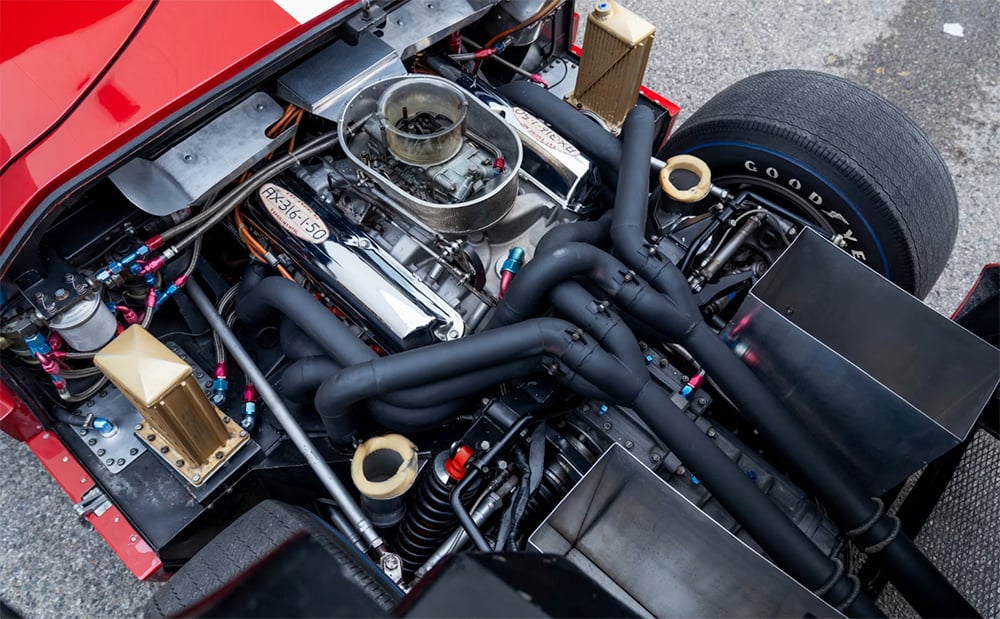
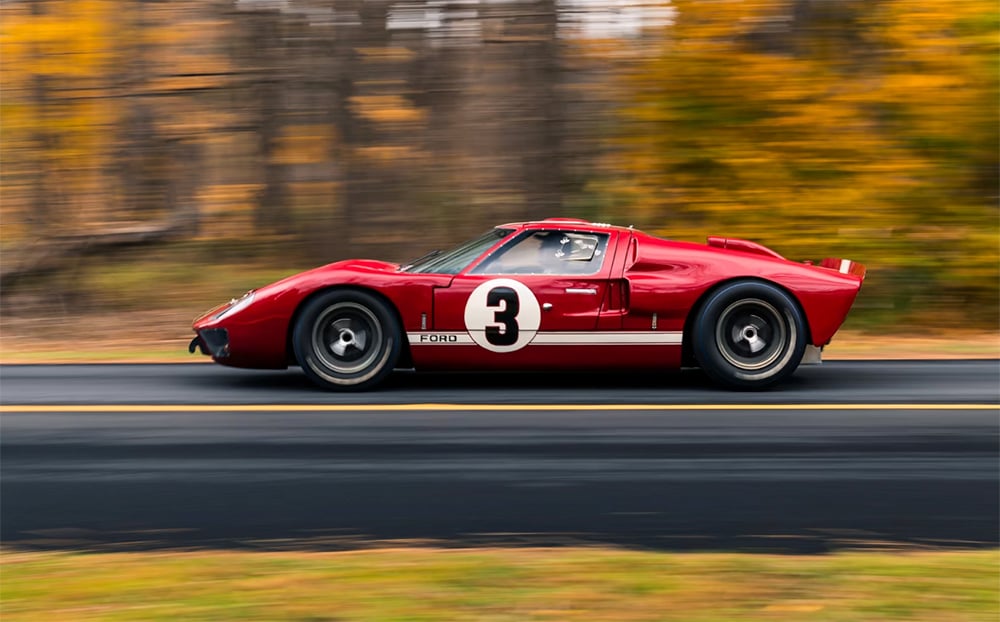
Above: 1966 Ford GT40 MkII 427 cubic inch big block V8 engine used in the Ford GT40 (photos courtesy of Mecum Auctions) specifications:
- XGT-3
- Only 11 GT40 MkII cars were built and only 9 examples survive substantially intact
- 1 of only 3 factory examples produced with a lightweight chassis
- Of the 9 MkIIs, most are in the hands of collectors including Miles Collier, Fred Simeone and the Shelby American Collection
- Built by Shelby American at the legendary LAX facility
- Regarded by Ronnie Spain as the most original GT40 MkII
- Spain is quoted stating "There are other MkIIs which have been fabulously restored to original configuration, but only XGT-3 is in that original condition still"
- Complete original body and factory thin-gauge steel chassis
- Aluminum lightweight roof
- Adjustable suspension only present on the lightweight cars
- Built from the factory with LeMans fuel crossover tanks
- Owned by Ford Motor Company until 1977 and only four private owners since
- The Ford GT40 is regarded by many as America's most important racing car
- It is very unlikely that another GT40 MkII will become available in the near future
By the time collector Richard Ellis acquired the Super Snake from Charles Lillard, the odometer showed 26,000 miles and the car exhibited scarcely any wear. Ellis approached the restoration as an archaeologist, not a modifier:
- Correct hoses and wires sourced
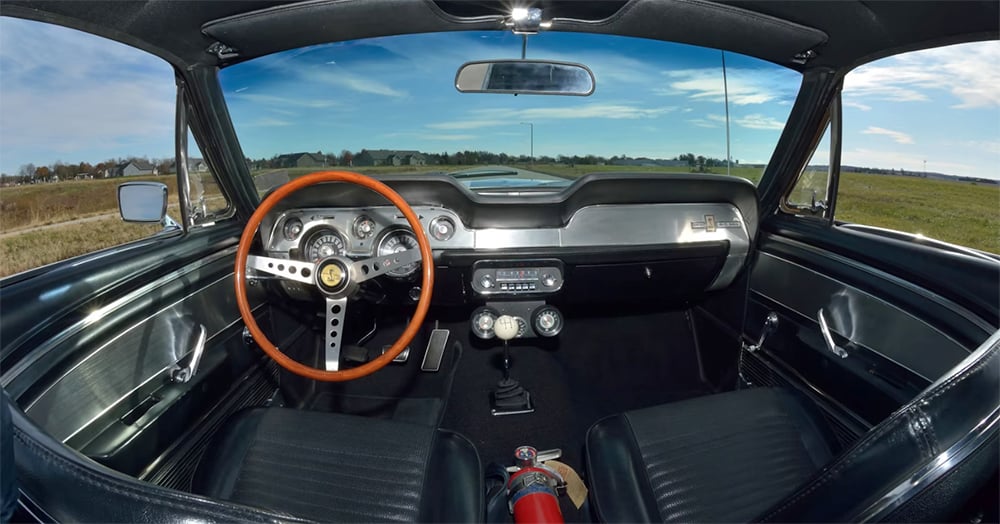
- Proper Rotunda fire extinguisher located
- New-old-stock Shelby 10-spokes acquired
- And, in a stroke of luck bordering on divine providence, a set of unused Goodyear Thunderbolt whitewalls discovered in a dusty Akron warehouse
As Ellis explained in Auto Enthusiast Magazine: “The Thunderbolts were for boring family cars. That’s why no one reproduced them. Finding that set… I couldn’t believe it.”
The Super Snake would later grace the pages of Colin Comer’s Million Dollar Muscle Cars before joining the curated collection of Shelby aficionado John Wickey.
A Machine That Shouldn’t Exist - But Thankfully Does
History often hinges on accidents:- A tire test request.
- A sales manager’s audacious idea.
- An engineer’s deft hands.
- A Texan with the heart of a racer whose solution was always to add more power.

From those unlikely ingredients emerged the only car Shelby ever fitted with a Le Mans 427 for public consumption - a single Mustang that roared once at full fury and left behind a legacy disproportionate to its lone production number.
There is only one Super Snake:- A one-car constellation in the Shelby universe.
- A mechanical poem written in pressure, heat, RPM, and nerve.
- A reminder that the golden era of American performance wasn’t just about horsepower - it was about possibility.
And the Super Snake remains, to this day, the most intoxicating “what-if” Mustang ever built.
Ford Mustang & Shelby Mustang Components from Classic Industries
If your Ford Mustang or your Ford Shelby Mustang is in dire need of restoration, performance, or restomod components, you can initiate your search for Ford Mustang parts online. You can also supplement your online parts search by also obtaining the Classic Industries' Mustang Parts & Accessories Catalog. By clicking the button just below, you'll be asked to fill in some shipping information. You can download a PDF version and/or have a printed catalog mailed to you. Happy hunting, shopping, building, driving, and enjoying your Ford Mustang and/or Shelby Mustang!
But Wait...There's One Other Must Have Tool for Your Mustang Paddock...
The New Classic Industries Digital Ford Mustang Parts and Accessories Catalog is just waiting for you to find those must-have items for your Mustang or Shelby Mustang at the considerable speed of the unicorn 1967 Shelby GT500 Mustang Super Snake.

Classic Industries' Ford Mustang History Articles
We have a growing library of Ford Mustang and Shelby Mustang history articles available for your entertainment, education, and inspiration. Have fun in the CI library:
- Ford Mustang History: Creating the First Pony Car
- 4th Gen SN95 Mustang History: Development & "Fox 4" Concept Cars
- Fox Body Mustang: Development, Concepts, and 1979-1993 Year Changes
- 1964-1973 Ford Mustang VIN Decoder & Pre-Purchase Buyer's Guide
- 1964.5 (Early 1965) Mustang VIN & Data Plate Decoder
- The Wild Horse Galloped Away - 1969 Shelby GT350 Mustang Fastback
- Visiting the Segerstrom Shelby Event Center - Mr. Shelby is Smiling!
- Building & Driving a Factory Five Racing Mk4 1965 427SC Cobra Replica
- Decoding Your 1965 Ford Mustang's Data Plate & VIN
- 1965-1970 Shelby Mustang Paint Colors, Fun Facts, & Specifications
- Videos: Restoring v Restomodding a 1965-1973 Ford Mustang - You Decide
- Top 10 Restoration Mistakes on the First-Generation 1965–73 Ford Mustang

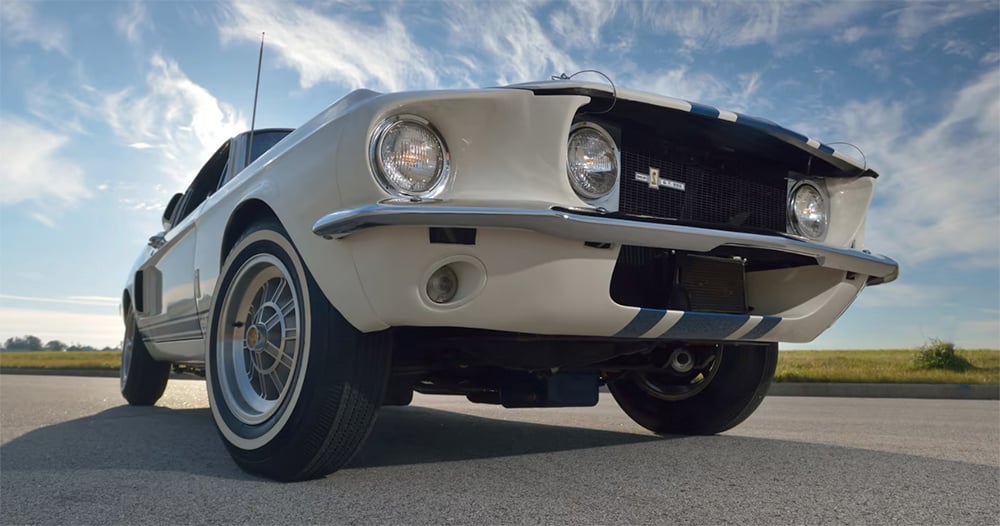
Above: Those Goodyear Thunderbolt bias-ply tires on the 1967 Shelby GT500 Super Snake are seriously narrow! A Ford GT40 Mk II 427 engine, built specifically for this car, made 540-horsepower and had a top speed of 170 miles per hour! The Super Snake was purpose-built for the Goodyear Thunderbolt tire test. For the test, the Super Snake drove 500 miles at an average of 142 MPH and retained 97% of the original tire tread on whitewall Goodyear Thunderbolt street tires. To distinguish the car, there's unique Guardsman Blue (mfg. code A-1630) LeMans stripes over Wimbledon White (code 4) paint. At the Mecum Spring Classic Auction of 2013, the Super Snake sold for $1.3 million! At the Mecum Kissimmee, Florida auction in January 2019, the Super Snake sold for $2.2 million! The prototype first sold in August 1967 for $5,000! The Shelby Mustang GT500 Super Snake images were supplied courtesy of Mecum Auctions.
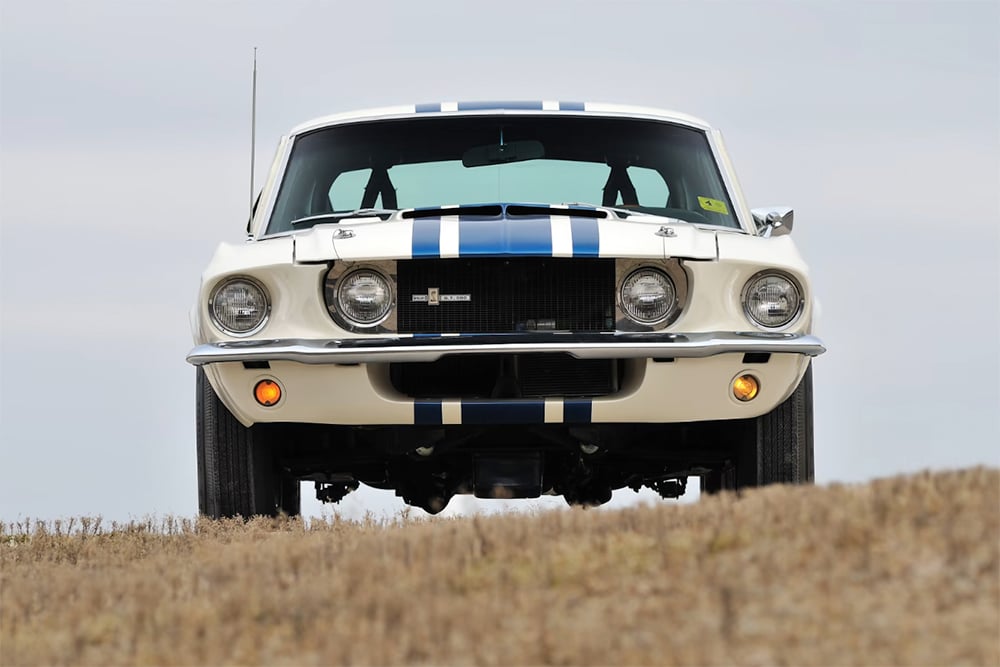
Above: Notice the chrome surrounds for the outboard driving lights? The unicorn pony/muscle car rests atop a mountain, before racing again at the pinnacle of automotive enthusiast history!