
 If you’re a Mopar person, you already know the vibe: there are muscle cars… and then there are aero cars - the factory-built, street-legal loopholes that Detroit unleashed when NASCAR glory mattered more than subtlety. At the top of that food chain sits the 1969 Dodge Charger Daytona, the pointy-nosed, high-winged homologation special that looks like it escaped from a wind tunnel and somehow got license plates.
This wasn’t a decal package or a trim-level flex. The Daytona was Dodge’s full-send answer to high-speed oval warfare - built to stop the Charger from acting like a parachute at 180+ and start acting like a missile with turn signals.
Video: 1969 Dodge Daytona Charger - Never Titled or Sold - Backyard Barn Finds
Why the Daytona Exists: NASCAR Made Them Do It
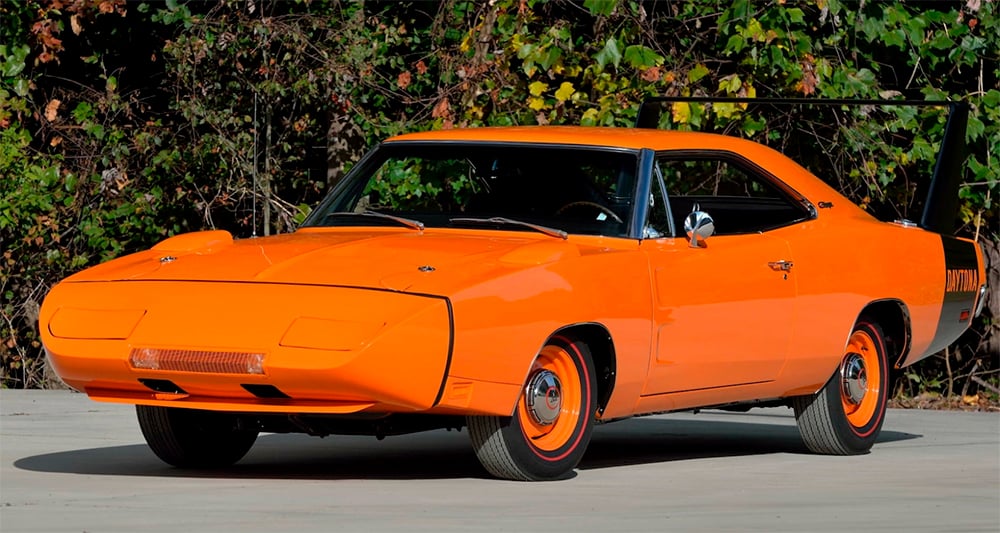
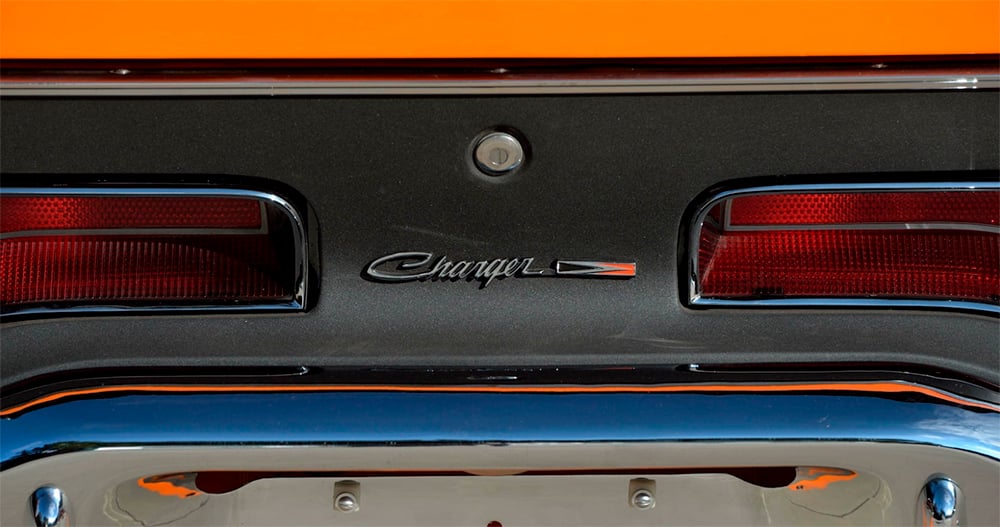
Above and below: 1969 Dodge Daytona in the one-of-one exterior hue of Omaha Orange (photos and highlights courtesy of Mecum Auctions):
- Special order Omaha Orange paint
- The broadcast sheet shows special order and 999 paint code
- Same Georgia owner from 1973-1999
- Discovered and acquired by Tim Wellborn in 1999
- Restored by Roger Gibson over two years
- During the restoration a quality control sheet was discovered above the headliner that ordered the car and wheels to be painted Omaha Orange
- The order number on the quality control sheet matches the order number on the broadcast sheet
- 440 CI V-8 engine
- 4-speed manual transmission
- Black interior
- Console
- Bucket seats
- Hurst shifter
- Solid State AM radio
- Factory correct 15 inch body color steel wheels
- Goodyear Polyglas Redline tires
- Featured on the cover of September 2013 Muscle Car Review
- Original broadcast sheet
- Quality inspection sheet
- Letter from the previous owner
- Restoration receipts
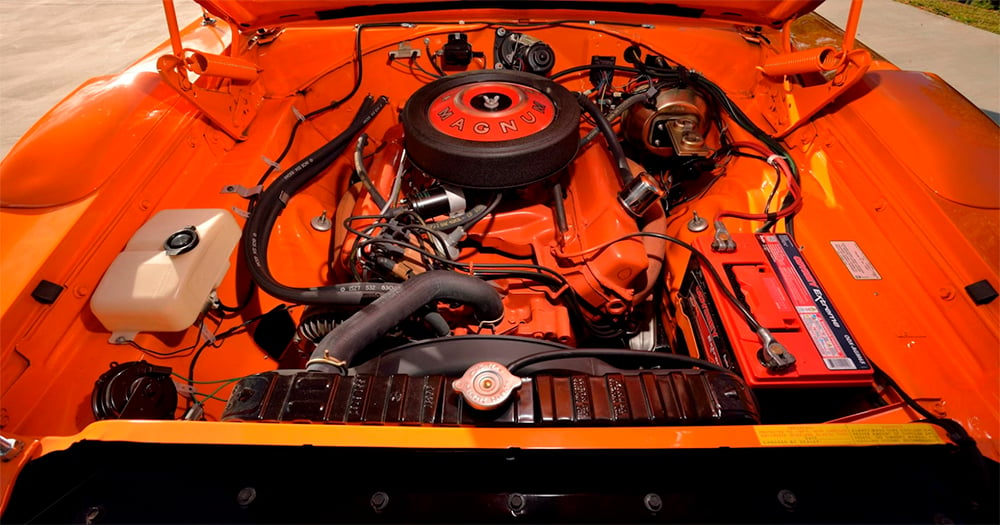
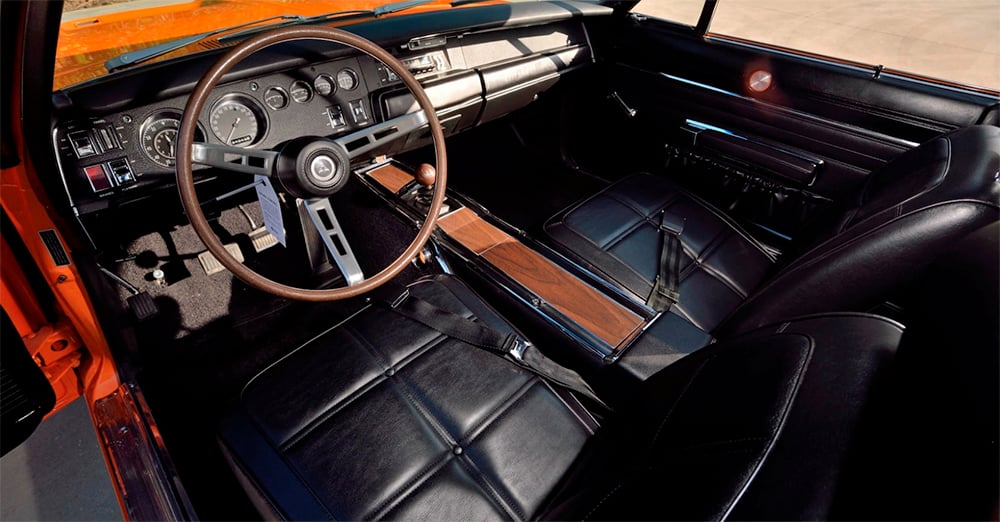
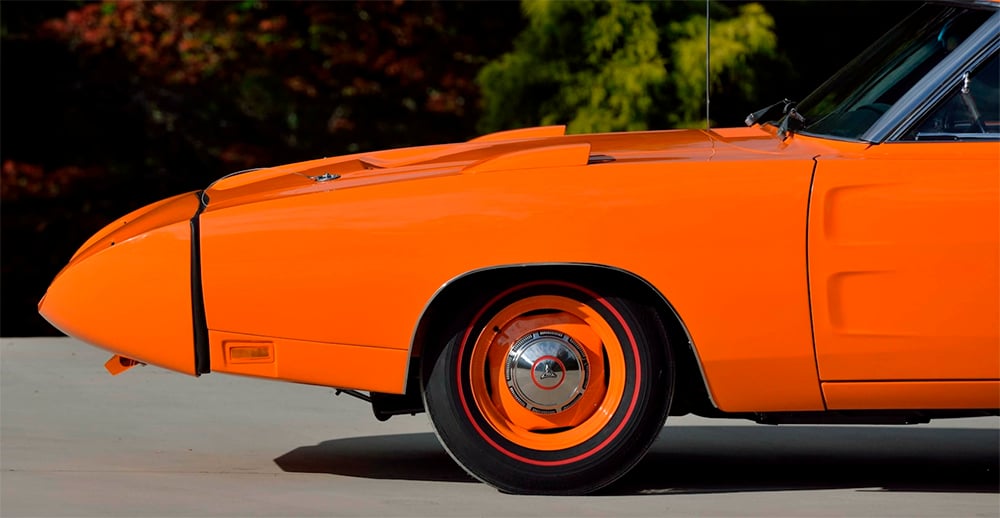
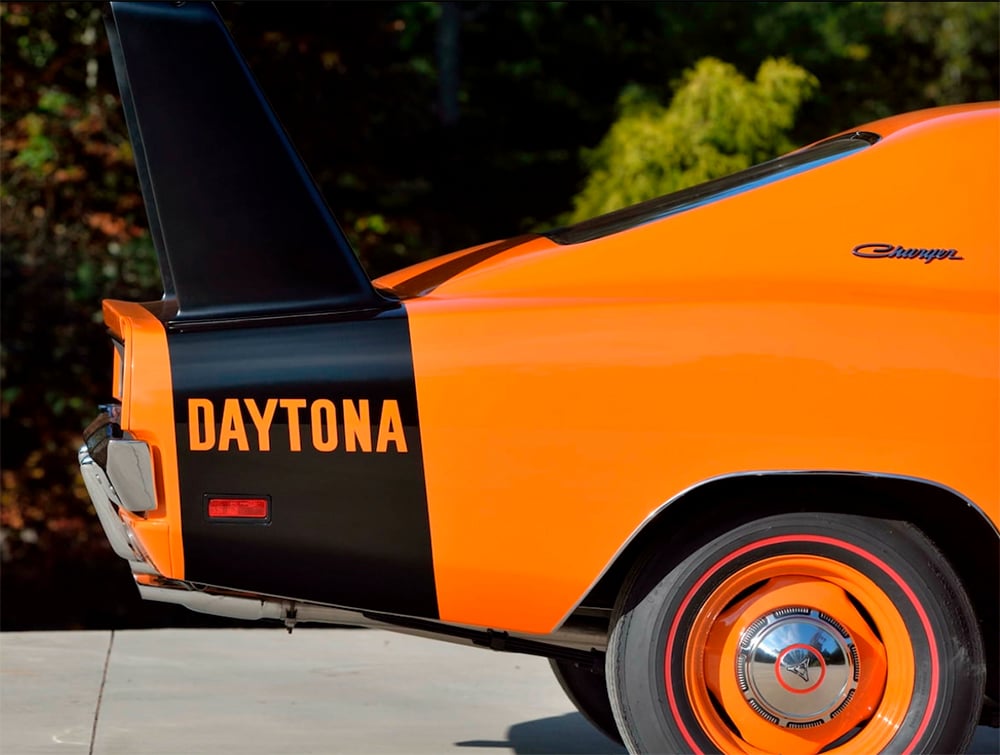
The standard ’69 Charger was a gorgeous bruiser, but at super speedway velocity its shape was working against it. Dodge needed stability, reduced lift, and less drag - fast. So, they took the Charger 500 learnings and went even harder: an all-new nose cone, flush rear backlight treatment, and the now-iconic tall rear wing designed to live in clean air and keep the car planted.
And it worked. The aero package didn’t just make headlines - it forced NASCAR to pay attention.
The 200 MPH Moment
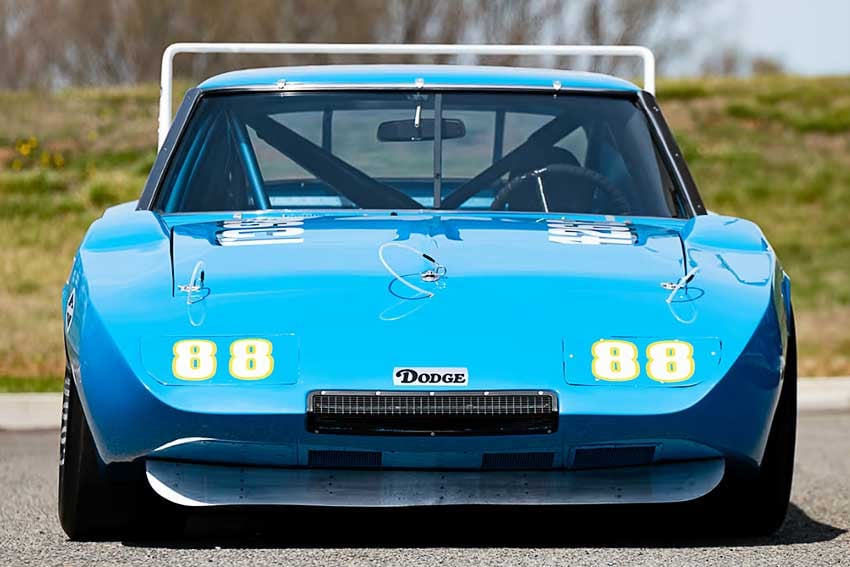
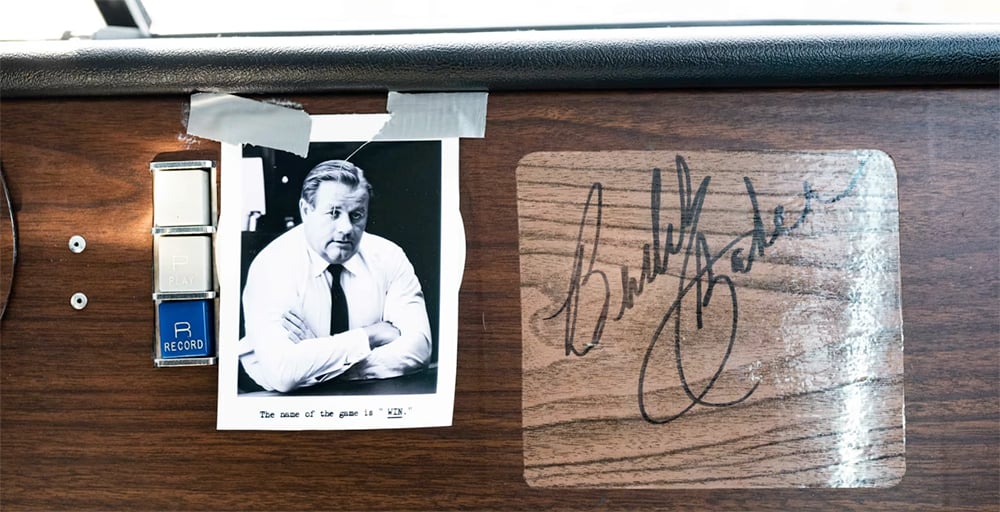
Here’s the mic-drop fact that every Daytona story has to include during testing at Alabama International Motor Speedway (now Talladega Superspeedway), Buddy Baker turned a lap at 200.447 mph in a Charger Daytona - the first closed-course lap over 200 mph (lead photo and those below).
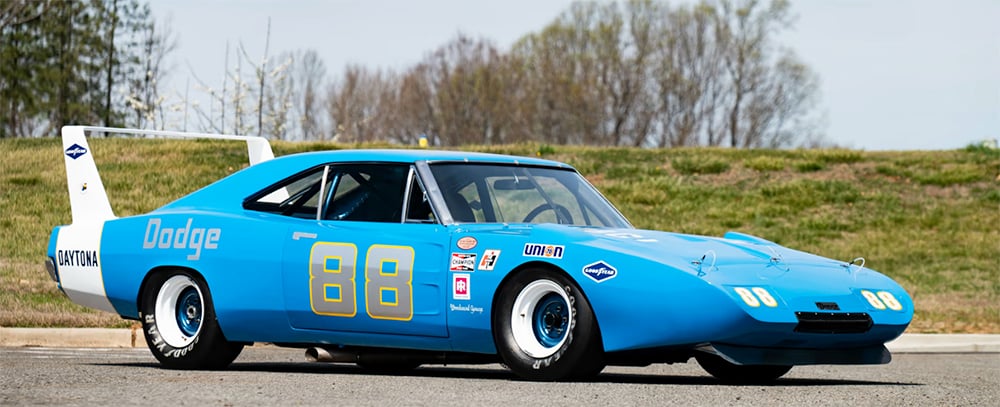
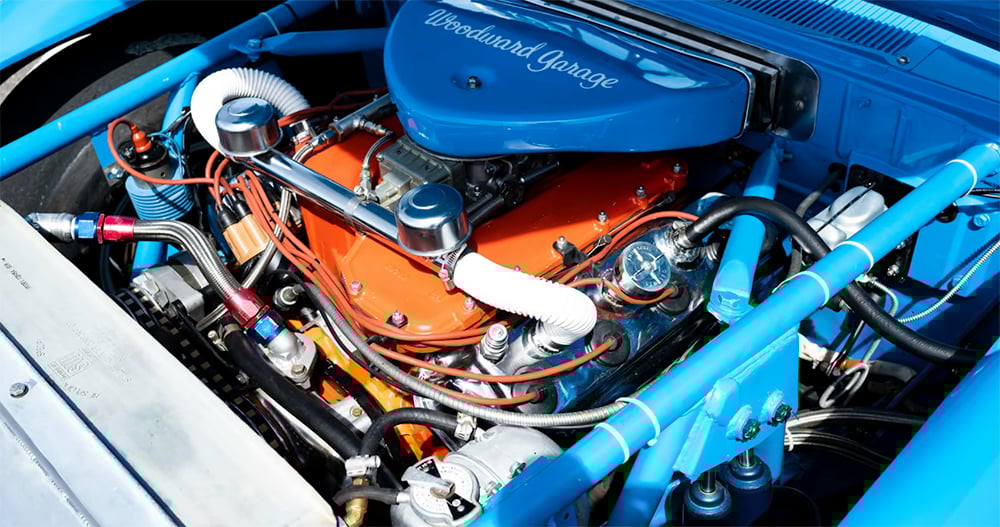
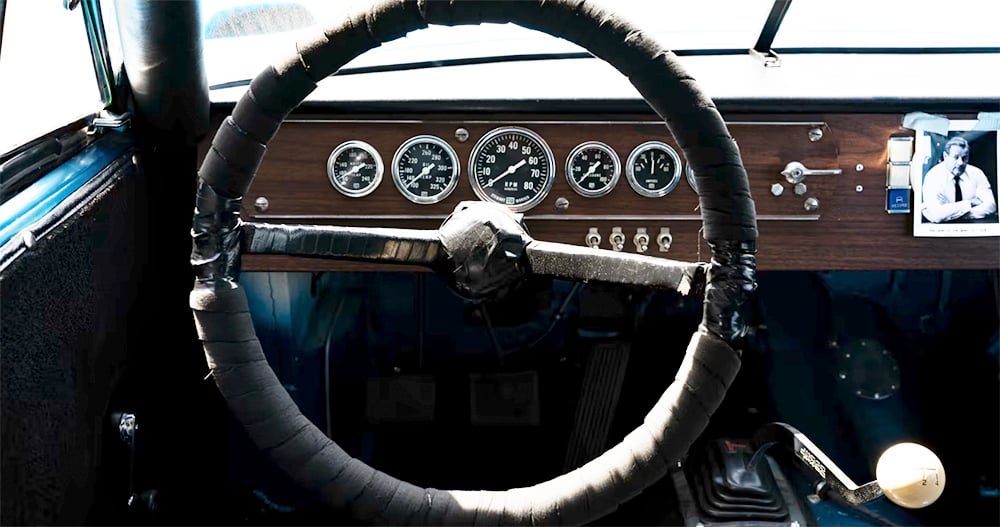
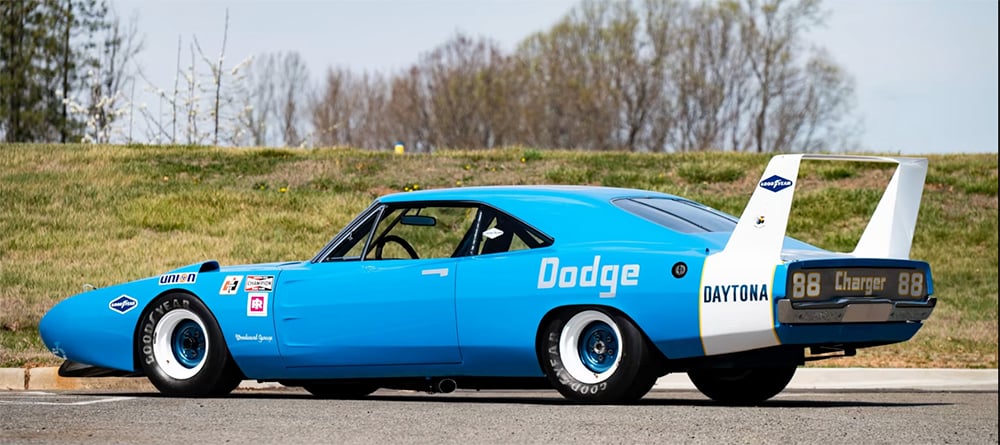
Lead photo, just above, and below: 1969 Dodge Hemi Daytona NASCAR - The First Car to Officially Top 200 MPH (photos and specifications/highlights courtesy of Mecum Auctions):
- The first car to officially top 200 MPH on a closed course circuit
- Buddy Baker set an official lap speed of 200.447 MPH on March 24, 1970 at Talladega
- Serial No. DC-93
- Early Aero Development car that raced in NASCAR Stock Car competition as no. 88
- DC-93 is an Early Charger 500 press car stolen, recovered and taken to Nichels Engineering
- Assembly of car overseen by Bob Tarozzi at the direction of Larry Rathgeb
- Known in test documentation as the Blue car
- Authenticated by George M. Wallace on April 7, 2001
- Driven by Paul Goldsmith in the 1969 Daytona 500
- Charlie Glotzbach sat on pole in DC-93 at 199.446 MPH, a world record, for the Inaugural Talladega 500 in September 1969
- Other drivers of DC-93 include Bobby Allison, Dan Gurney, Bobby Isaac and James Hylton
- Driven by Don White to race wins in USAC Stock Car competition
- First test with Daytona Package took place at the Chelsea Proving Grounds in July 1969, at 205 MPH
- Purchased from Don White by Greg Kwiatkowski in 1998
- Comprehensive multi-year restoration by Ray Evernham Motorsports
- An important car to Ray Evernham because of its significance to Chrysler and Wing Car racing history
- 426/575 HP Hemi EX-144 V-8 Talladega speed record engine
- 4-speed manual transmission
- Holley Dominator carburetor
- Blue no. 88 livery
- Black interior
- The Daytona Package on DC-93 resulted in a zero lift vehicle with a drag coefficient of 0.29
- DC-93 was a groundbreaking car that had many innovations used on future Chrysler racing cars
- First use of directional fins to direct airflow to the radiator
- Sealed bottom from nose to K-frame for better aerodynamics
- First use of a dry sump to lower the engine and also make more power
- Quick fill on left fender for the dry sump tank
- Engine bars added from shock towers to firewall for stiffening
- Engine air management through the cowl at the base of the windshield refined
- Steering gear lower shaft attached to the K-frame for better handling and more speed
- Square fuel tubing on right side floor pan to attach data recording equipment
- Entire front end 'droops' forward of the front tires for less drag
- Body raked to the chassis by 1.5 degrees for better aero while maintaining handling
- Quarter panels flared in front of the rear tires for better aerodynamics
- New style rear axle cooler for better efficiency
- Wing supports to transfer the down force directly to the trunk floor
- Supports under the trunk floor outers to transfer the down force to the frame rails
- Letter of Authenticity from George M. Wallace verifying the provenance of DC-93
- Vintage photos
- Sold on a Bill of Sale
That number wasn’t just bragging rights - it was a warning shot. It helped push NASCAR toward rules that eventually kneecapped the aero-car era.
“Rare” Isn’t Hype Here: Production Numbers
The ’69 Daytona is legitimately scarce:
- 503 total Daytona’s built for 1969.
- Only 70 of those reportedly left the factory with the optional 426 Hemi.
So, when someone calls one “rare,” they’re not tossing around an auction-brochure adjective - they’re stating a fact.
What Makes a Daytona a Daytona (Not “A Charger with a Wing”)
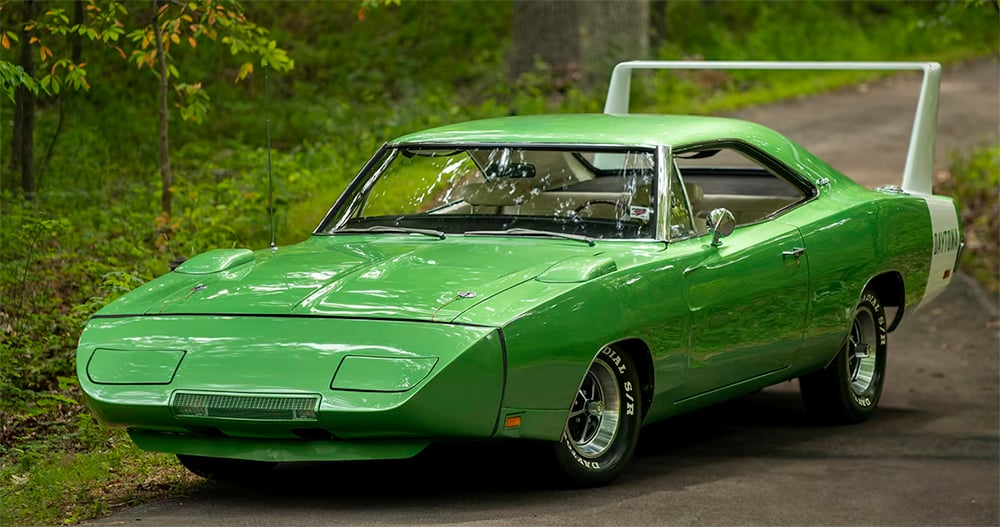
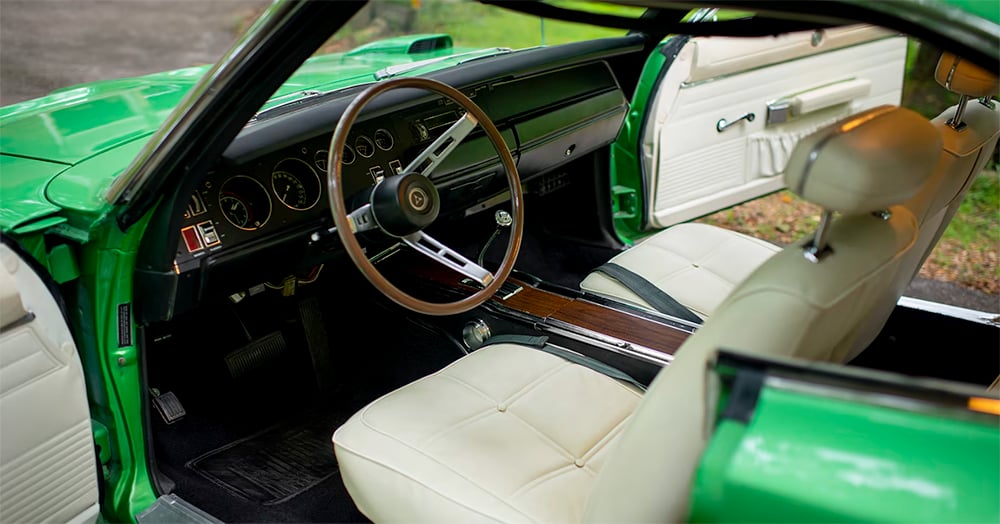
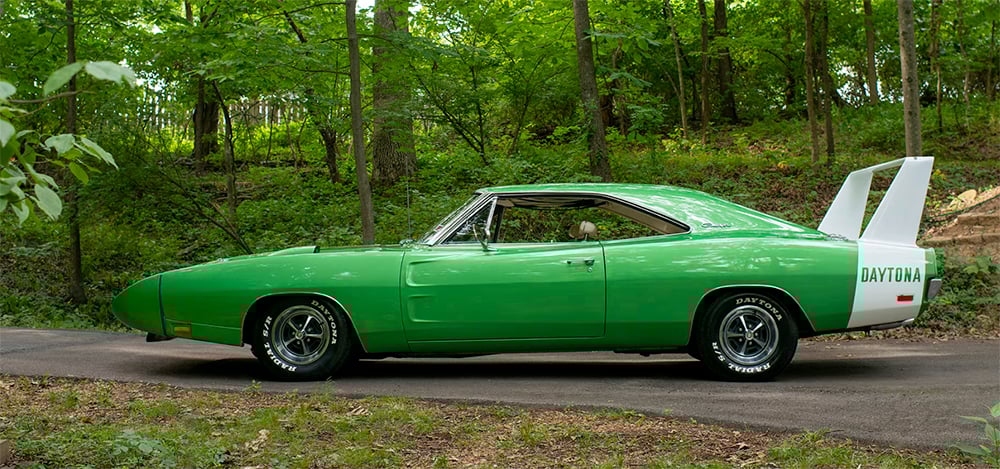
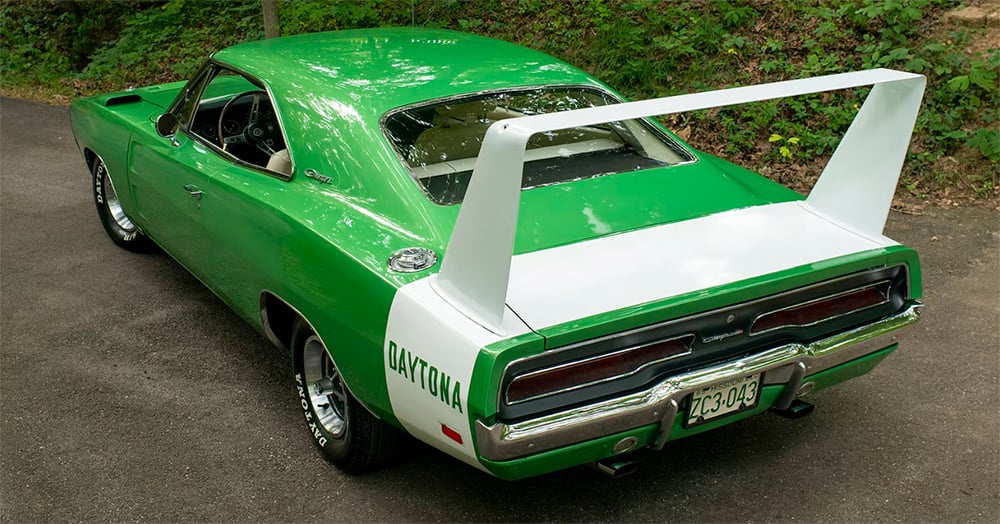
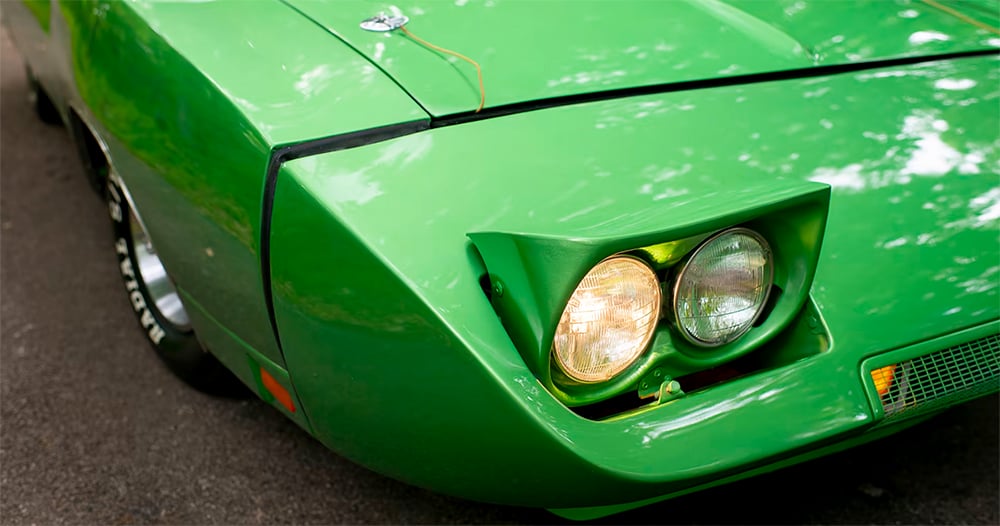
Above and below: 1969 Dodge Daytona Charger (photos and highlights courtesy of Mecum Auctions):
- 1 of 503 Dodge Daytonas produced in 1969
- One owner since new
- Window sticker, invoice and broadcast sheet
- Sold new at Florissant Dodge, Inc. in St. Louis, Missouri
- Kept in long term storage by original owner until 2001 when it was brought out to be restored, restoration completed in 2002
- Body media-blasted and refreshed in original color
- Ran on the Gateway International Raceway on September 8, 2002 following the restoration
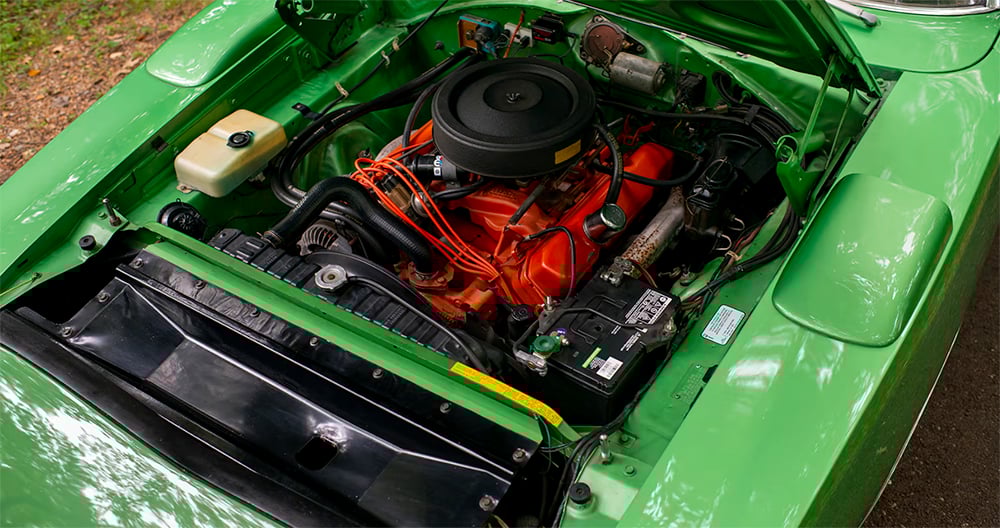
- 440/375 HP Magnum V-8 engine with 10.1 compression
- Engine was bored, balanced and blueprinted at time of restoration
- Torqueflite automatic transmission
- A36 Performance Axle Package with 3.55 gears and Sure Grip
- Power steering
- Power brakes with front discs
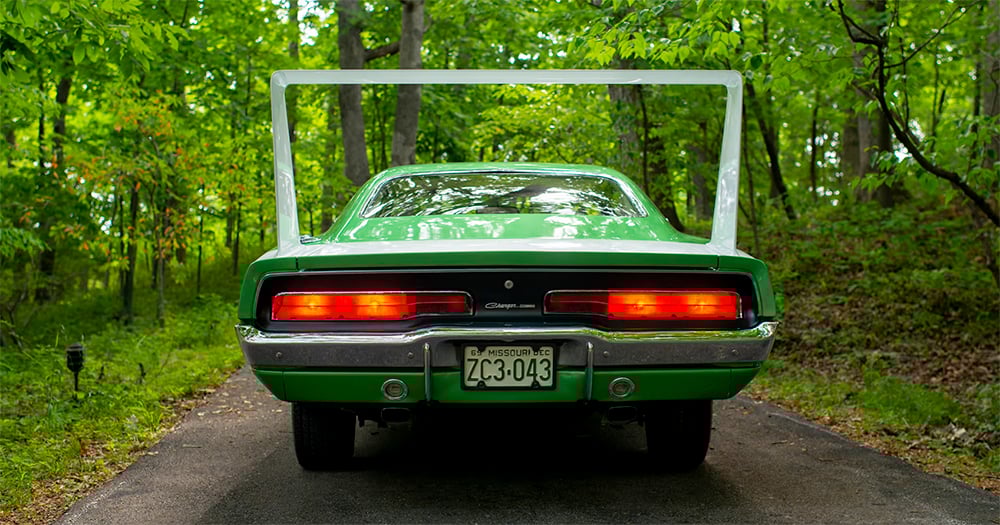
- Bright Green Metallic with White wing
- Rare C6W White and Black interior
- Bucket seats and center console
- Locking gas cap
- Chrome driver's mirror
- Music Master AM radio
- 3-speed wipers
- Sport steering wheel
- Styled road wheels with Daytona radial S/R tires
- Service records, gas and parts receipts and restoration photos
The Daytona’s aero hardware is a package of very specific pieces, not a single bolt-on:
- 23-inch-tall rear stabilizer wing on the rear deck
- Sheet-metal nose cone replacing the upright grille
- Flush rear backlight + “window cap” to smooth airflow over the recessed Charger rear glass
- Unique front fenders/hood details and fender-mounted cooling scoops
That combo is what separates real Daytona engineering from tribute-car theater.
Full Specifications: 1969 Dodge Charger Daytona (XX29)
Factory Powertrain (Street Trim)
Standard engine
- 440 cu in (7.2L) Magnum V8
- 375 hp @ 4600 rpm
Optional engine
- 426 cu in (7.0L) Hemi V8
- 425 hp @ 5000 rpm
Transmissions
- 4-speed manual
- 3-speed Torqueflite automatic (727)
Chassis / Running Gear
- Layout: FR (front engine, rear-wheel drive)
- Brakes: front discs / rear drums
- Tire size: F70-15
- Built on Charger R/T-spec heavy-duty suspension/brake setup
Dimensions
- Wheelbase: 117 in (2,972 mm)
- Length: ~226–226.5 in
- Width: 76.7 in (1,948 mm)
- Height: 53 in (1,346 mm)
- Track (F/R): 59.7 / 59.2 in
Weight (varies by drivetrain)
- Curb weight reported around ~4,079–4,189 lb. depending on engine/trans combo
What It’s Like in the Real World (A.K.A. Why People Lose Their Minds Over These)
A Daytona hits different because it blends three things that almost never coexist:
- Visual drama (the wing and nose are unapologetically outrageous)
- Real motorsport purpose (the aero isn’t cosplay—it’s functional)
- Big-block manners (it’s still a B-body at heart: long doors, deep dash, torque for days)
Even standing still, a Daytona looks like it’s doing 180. And when you remember it actually did the 200+ thing in-period testing, the car stops being a “cool classic” and becomes a rolling historical event.
Wrap-Up: The Daytona Is the Loudest “Because Racing” Ever Built
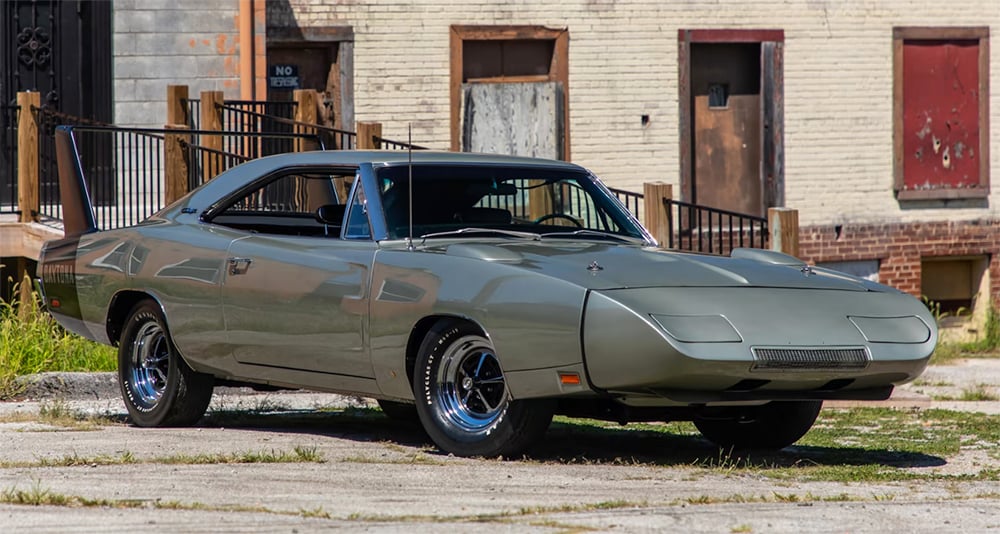
Above: 1969 Dodge Daytona in A4 Silver Metallic with Black rear wing and tail stripe (photo courtesy of Mecum Auctions)
The ’69 Charger Daytona is the kind of machine that could only happen when manufacturers were willing to build a few hundred street cars just to dominate on Sunday. 503 built, 70 Hemis, a wing tall enough to block a sunset, and a name permanently attached to the first 200+ mph closed-course lap.
It’s not just rare—it’s a factory-backed flex from the horsepower wars, frozen in sheetmetal.
Classic Industries - Download & Explore
The Classic Industries 1960–1976 Mopar A/B/E-Body Digital Catalog is available now, free of charge. Whether you're restoring a vintage classic to showroom condition or building a weekend cruiser with modern touches, this catalog is built to help you do it right.
You can also obtain the latest printed Mopar parts and accessories catalog, for those days when your computer is kaput, or you just want that tactile feel of letting your fingers and eyes doing the finding with the large and in charge Classic Industries Mopar printed catalog.

Classic Industries Mopar Article Archives
Get reading and video watching the Classic Industries' article archives that cater to all things Mopar - the mighty Pentastar!
- Videos: Restoring v Restomodding the 'Cuda: Clash of the Mopar Titans
- Mopar VIN Decoder & Fender Tag Decoder: A-Body, B-Body, & E-Body Specs
- Restoring v Restomodding a ’66–’74 Dodge Charger: A Gearhead’s Dilemma
- Videos: Top 10 Restoration Mistakes on the 1966–1974 Dodge Charger
- 1973 'Cuda - American Muscle Car Owner Honors Big Brother
- Mopar Paint: Dodge & Plymouth High-Impact Paint Colors
- How to Identify Classic Dodge and Plymouth A, B, and E-Body Vehicles
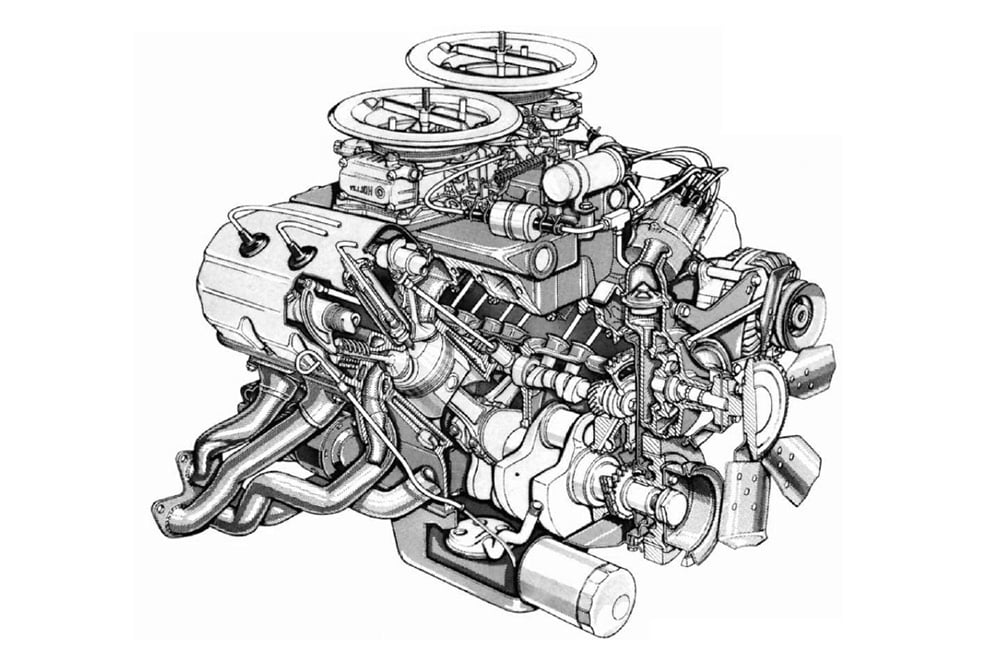
Above: Classic Mopar Engines: Slant Six, Small Block, Big Block, and 426 Hemi
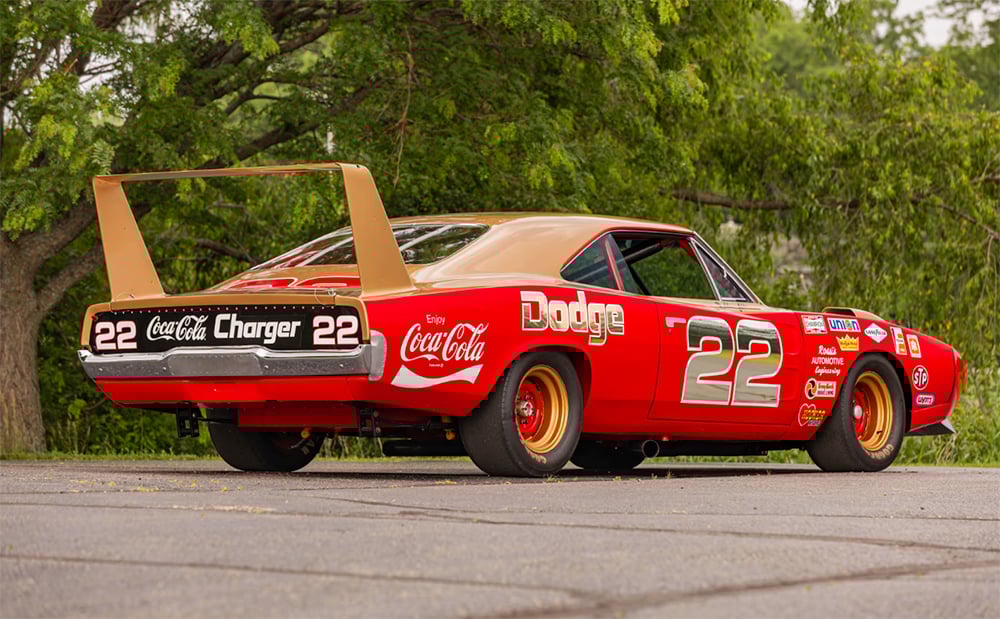
Above: 1969 Dodge Hemi Daytona NASCAR - driven by Bobby Allison (photo courtesy of Mecum Auctions)