

In the classic car world, we've watched many memorable design features and styling cues come and go over the years. Designers in the 1950s and 1960s borrowed styling elements from aircraft, leading to what some historians call the "Tailfin Era". In the 1970s and 1980s, T-tops rose quickly to popularity but disappeared just as fast. Pop-up headlights, also known as hidden headlights or hideaway headlamps, are another unique classic car feature that you won't see on new cars anymore. So what happened? Read on as we take a look back at the history of hidden headlights.

Photos courtesy of Mecum Auctions
Trendsetters & Concept Cars
In order to understand the origin of pop-up headlights, we need to go back all the way to 1936. That year, Cord — a division of Auburn Automobile Company in Auburn, Indiana — released a new model called the 810. To say the Cord 810 changed automotive history would be an understatement.

This high-end luxury car featured sleek styling and forward-thinking features such as front-wheel drive, independent suspension, a wide horizontal grille, variable-speed windshield wipers, and a standard built-in radio. But perhaps its most iconic feature was its hidden headlamps, which were tucked into the front fenders behind body-colored flaps. The driver activated the headlamps by turning a manual crank on the dashboard.
Cord went out of business in December of 1937, but its legacy lived on among automotive designers who drew inspiration from the 810 and its sibling the 812.

Above: The design team at Desoto introduced hidden Airfoil Lights for the 1942 model year, but it was a short-lived feature. (Photo via World Cars from the 1930s to 1980s / Facebook)

Above: Harley Earl in his 1938 Buick Y-Job concept car. (Photo via Hagerty Driver's Foundation)
General Motors' head of design, Harley Earl, was also inspired by the Cord 810. Earl created GM's first concept car, the 1938 Buick Y-Job (pictured above), which featured power-operated hidden headlamps.

Above: The 1951 Le Sabre concept car featured center-mounted headlamps hidden behind a moving grille. (Photo via HotCars)
Another Harley Earl concept car design, the 1951 Le Sabre, also featured hidden headlamps. However, instead of sitting behind doors on the fenders, these were positioned behind the grille (another trend that would catch on decades later).

The first major mass-produced car to receive pop-up headlights was the 1962 Lotus Elan, a small British sports car that used the feature to maintain its low-profile aerodynamic nose shape.
Pop-Up Headlights Go Mainstream
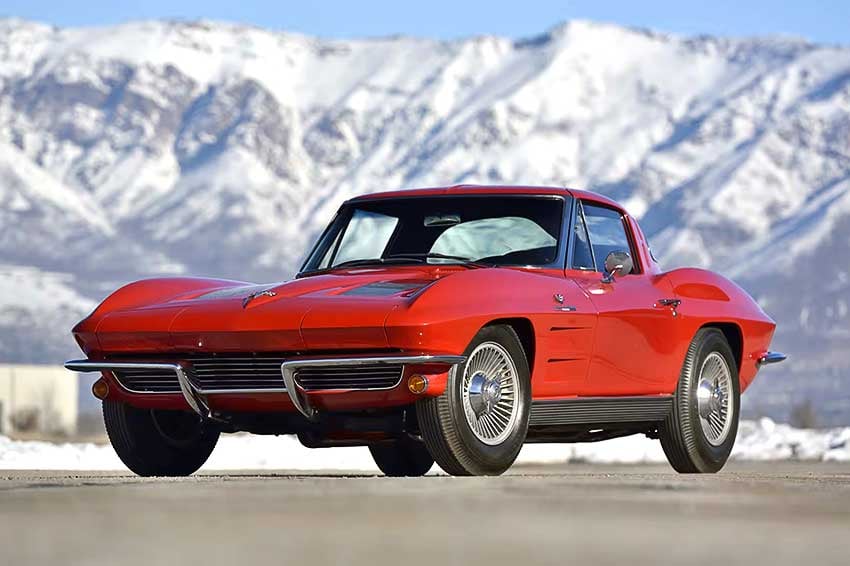
The Chevrolet Corvette is arguably the car that made hidden headlights go fully mainstream. For the new C2 generation which debuted in 1963, GM created rotating housings that aligned with the cone-shaped nose of the car. This was so popular that it became a standard feature on the Corvette through the end of the C5 generation in 2004.
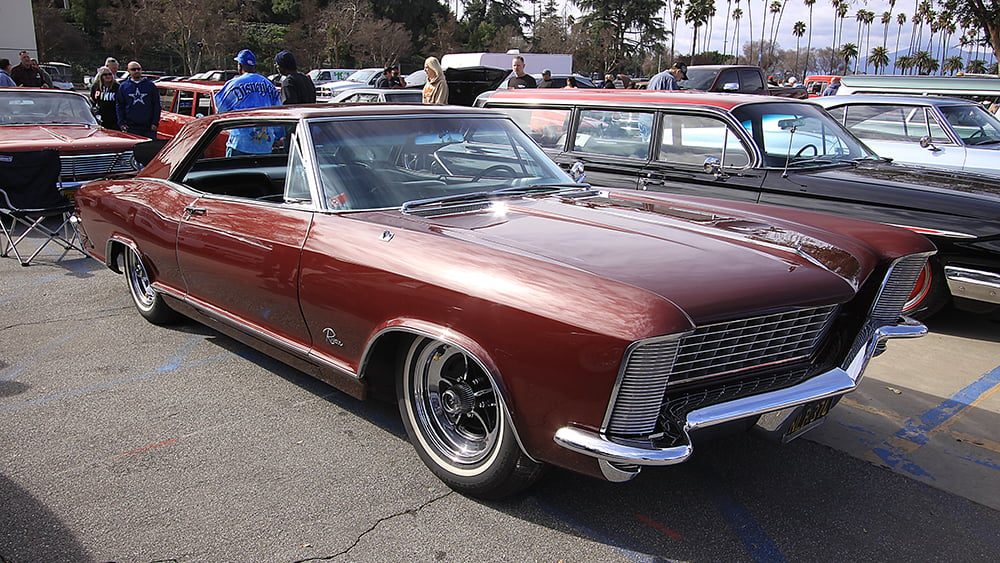
Buick also joined the hidden headlight trend with the 1965 Riviera, which had vertically stacked lights concealed behind clamshell-style doors.
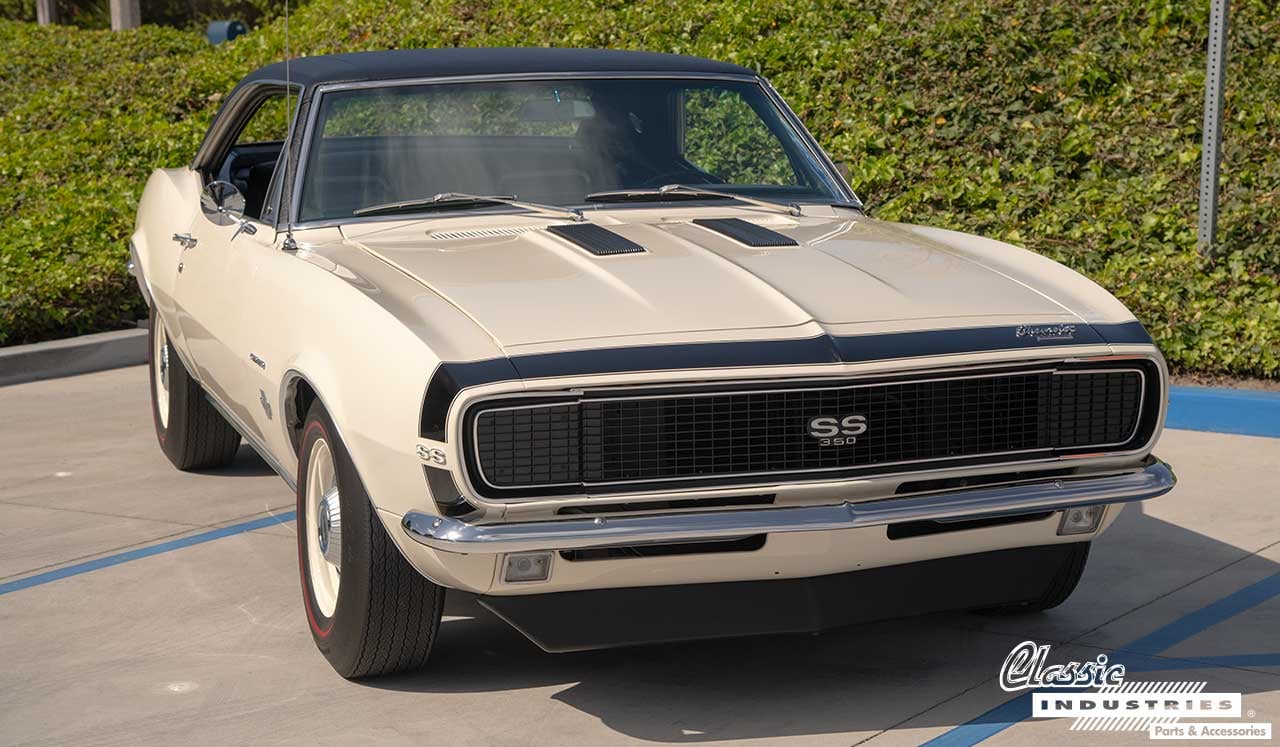
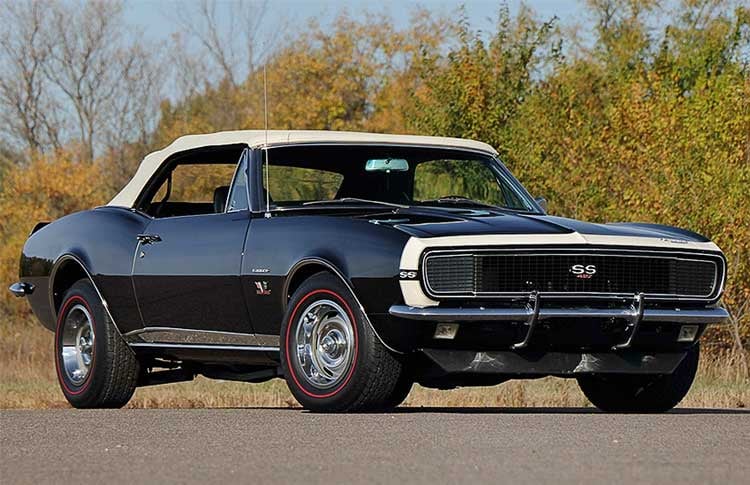
The 1967 Camaro made hidden headlights a distinctive option as part of the Rally Sport trim package. Every Camaro with the RS option was easily identifiable by its vacuum-operated headlight doors.
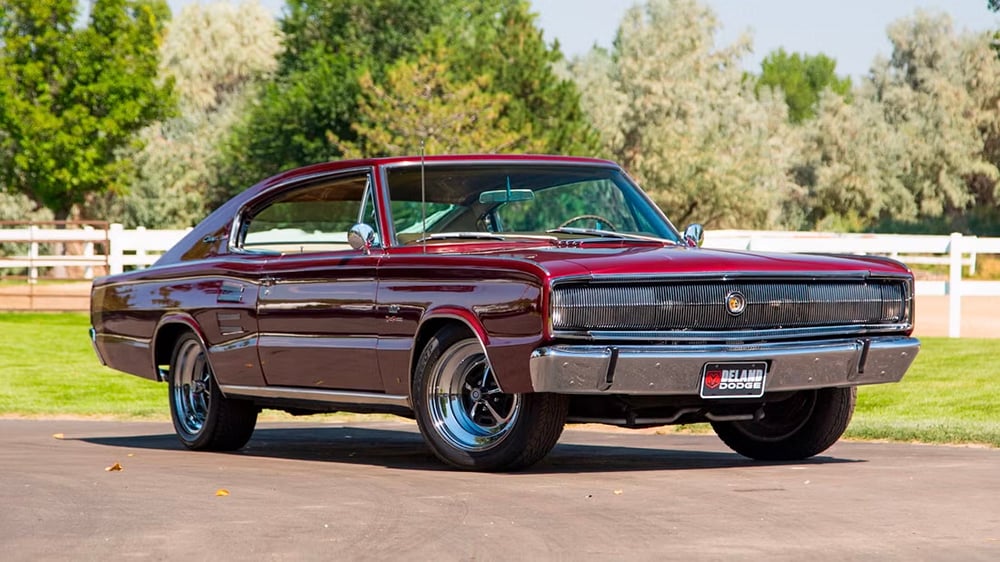
Of course, GM wasn't the only member of the Big Three automakers to use hidden headlights. Chrysler joined the fray with the 1966 Dodge Charger, and Ford added hidden headlights to both the 1967 Ford Thunderbird and 1967 Mercury Cougar.
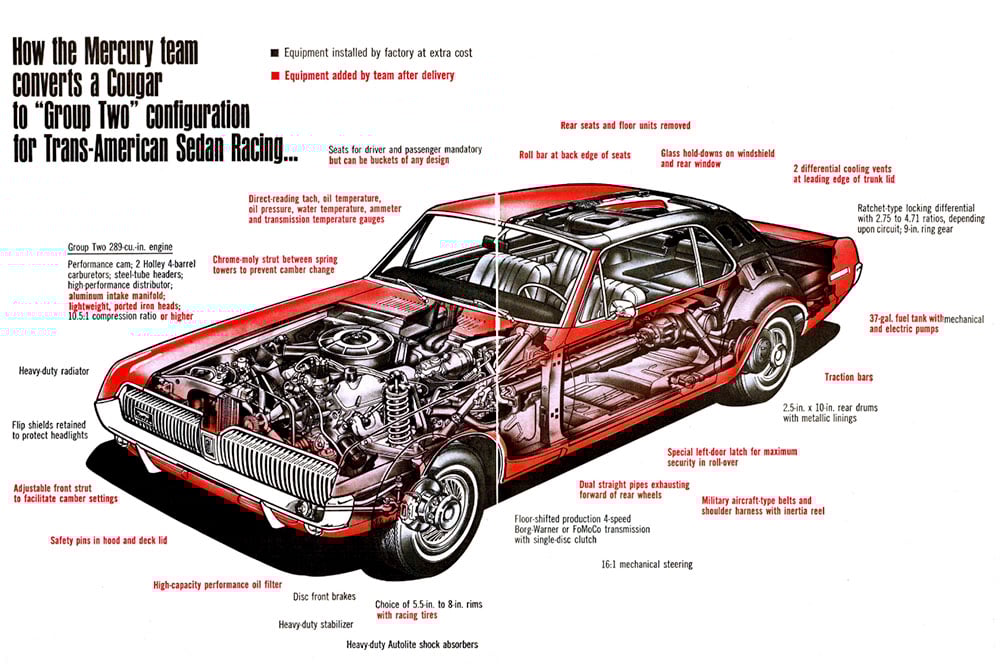
Above: Hidden headlamps are functional, too! Mercury advertised the Cougar's headlight "flip shields" as a way to protect the glass on its Trans Am racecars from flying debris.

Pop-up headlights also caught on outside the United States. Legendary cars such as the Lamborghini Miura, Ferrari California Spyder, and Maserati Ghibli all implemented this feature in 1966. Even the Japanese adopted it with the 1967 Toyota 2000GT.

Over the next three decades, pop-up headlights became so mainstream that they were essentially the default choice for many brands. For a complete chronological list, check out this Wikipedia article.
The End of the Pop-Up Headlight Era

In the early 2000s, increasing crash-test standards, headlight mechanism reliability concerns, and the development of smaller projector beam headlights led most manufacturers to phase out pop-up headlights.
Appropriately, the last holdouts with pop-up headlights were some of the vehicles that started it all: the 2004 C5 Corvette and the 2004 Lotus Esprit.
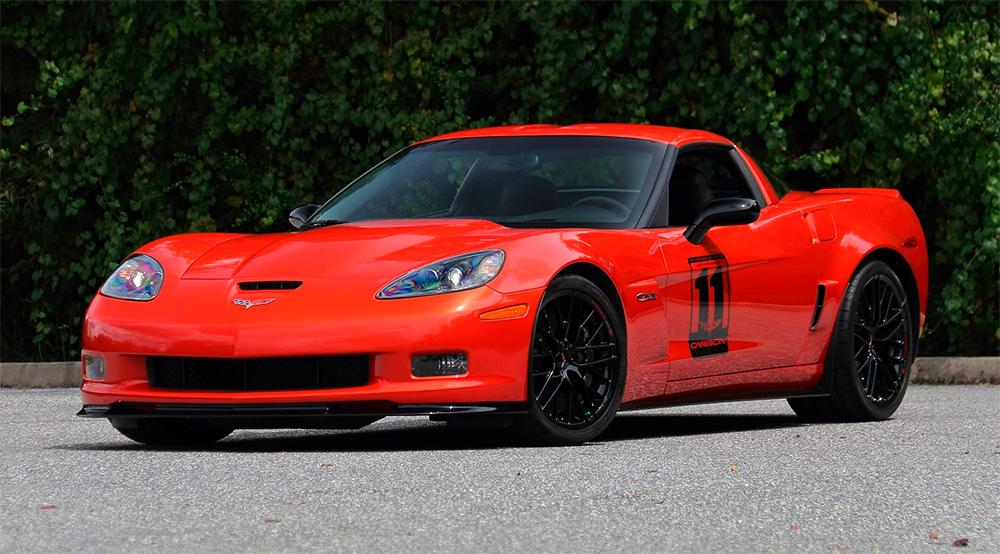
Above: In 2005, the C6 Corvette switched to fixed headlights with projectors.
Pop-up headlights and hidden headlights aren't offered anymore on modern production cars, but they're still around on a few limited-production models like the ARES Design Panther Project1.

Thankfully, classic car enthusiasts still have access to plenty of timeless designs with hidden headlights, and restoration has kept these vehicles alive as time capsules from the pop-up headlight era.
Looking for Classic Car Restoration Parts?
Classic Industries is the world's leading source for classic car restoration parts and accessories. That includes original-style hidden headlight assemblies, sealed beam headlamps, bulbs, wiring, and other lighting parts. Click the button below to browse our complete selection of restoration parts: