1 min read
Videos: Original vs Restomod Route for Your C1 or C2 Corvette
If there’s one car that stirs up late-night garage debates, it’s the early Corvette. The C1 (1953–1962) and C2 “Sting Ray” (1963–1967) weren’t just...
8 min read
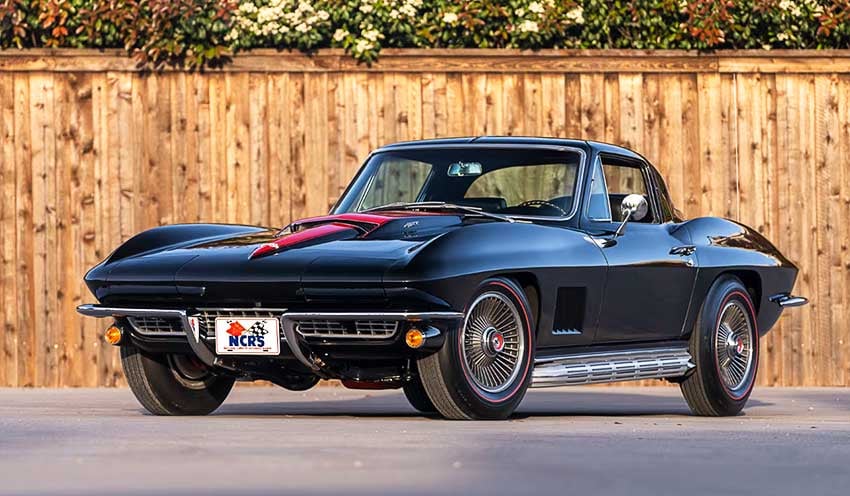 The 1967 Corvette Sting Ray holds a special place in automotive history as the final model year of the celebrated second-generation C2 Corvette. Originally intended to debut an all-new design, the C3 generation was delayed due to aerodynamic inconsistencies uncovered during testing. This postponement gave Chevrolet the opportunity to refine the existing 1963-67 platform one last time—resulting in what many enthusiasts consider the most perfected C2 Corvette ever built. Read on as we take a look back at the history, specifications, and factory options of the legendary 1967 Corvette.

Rather than a complete redesign, the 1967 Corvette benefited from a series of subtle but meaningful changes that elevated its appearance and performance. On the exterior, the most noticeable updates included a shift from the previous model's three large front fender vents to five smaller ones, improving both aesthetics and airflow. The rocker panels were also simplified, moving from a ribbed to a flat finish, creating a cleaner, more streamlined look.
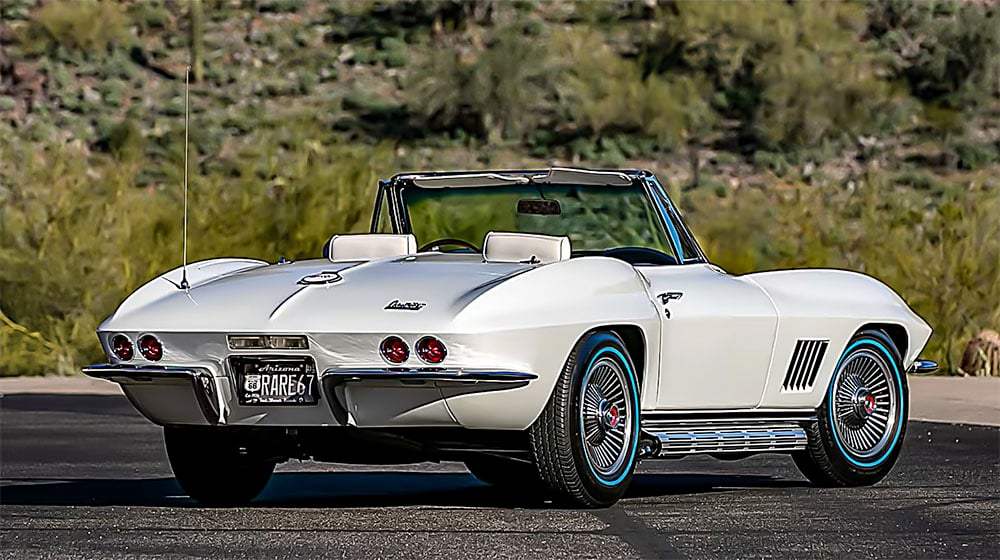
A single backup light was now mounted above the license plate, a design tweak that allowed for dual taillights on each side—an iconic touch that would influence future Corvette styling. The traditional wheel covers were replaced by six-inch wide Rally wheels with chrome beauty rings, adding a more aggressive and performance-oriented stance.

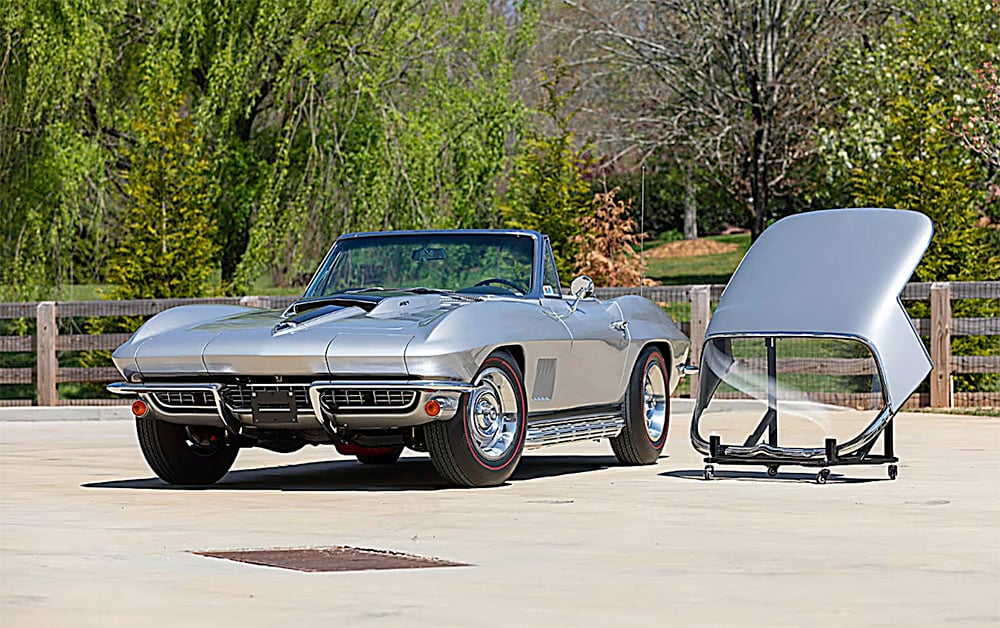
Interior updates were functional and focused on driver convenience. The hand brake was relocated from its awkward position under the dash to a more accessible spot between the seats. Additionally, upholstery was refined for a more upscale appearance. For convertible models, Chevrolet offered an optional hardtop with a black vinyl covering, a feature that echoed design cues seen on larger luxury vehicles of the era.
Click on the Paint Code Name to See the Mix Codes for the appropriate color:
| 900 Tuxedo Black | |
| 972 Polar White | |
| 974 Rally Red | |
| 976 Marina Blue | |
| 977 Lynndale Blue | |
| 980 Elkhart Blue | |
| 983 Goodwood Green | |
| 984 Sunfire Yellow | |
| 986 Silver Pearl | |
| 988 Marlboro Maroon |
Under the hood, the 1967 Corvette offered a wide range of potent engine choices, continuing the tradition of combining American muscle with sports car agility. These included a wide variety of small-block and big-block V8s.
The standout option was the 427 cubic inch V-8, which came in several variations to cater to a spectrum of performance appetites.
390 HP 427 CID V8
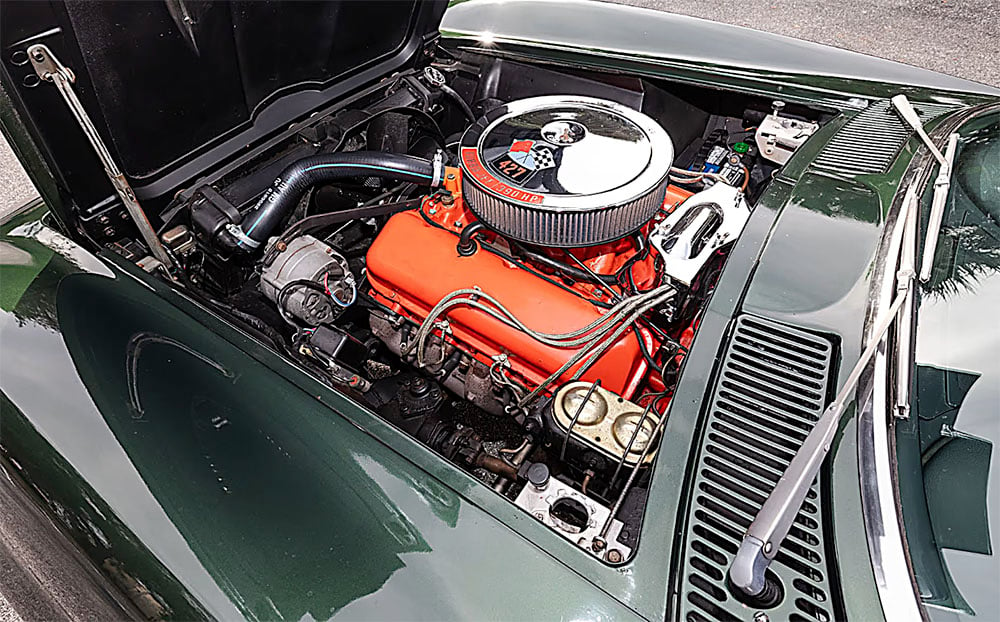
400 HP 427 CID V8

435 HP 427 CID V8
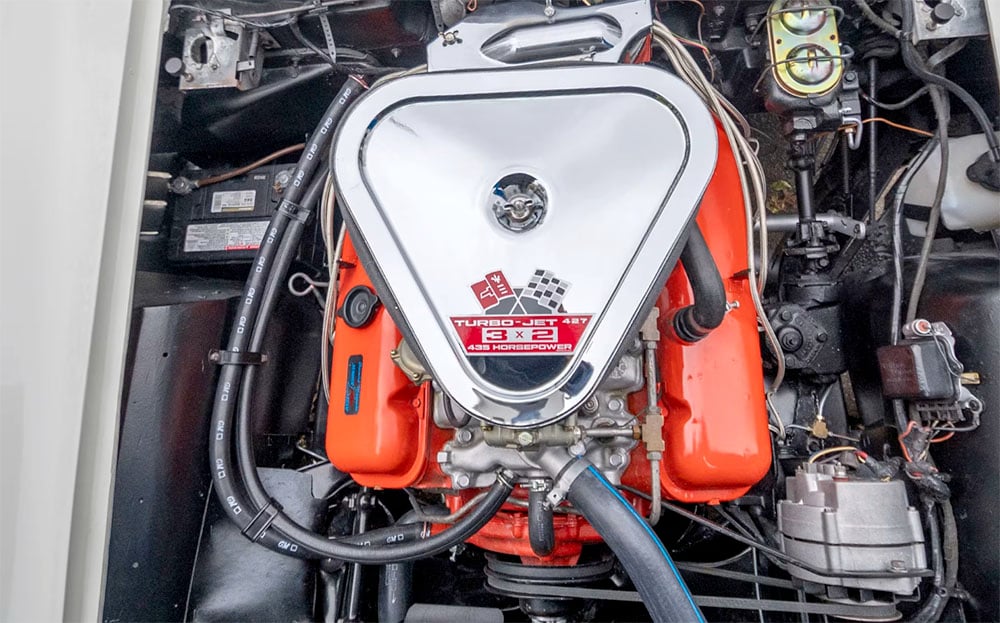
NOTE: Not available with automatic transmission.
L-88 "430 HP" 427 CID V8 - Rare & Race-Ready

Late in the model year, Chevrolet introduced what would become one of the most legendary engines in Corvette history: the RPO L88 427 CID V-8. Designed with track performance in mind, the L88 was a no-compromise powerhouse featuring:
Though officially rated at 430 horsepower—curiously less than the L71—the L88's true output was widely believed to be around 560 horsepower at 6,400 RPM. This was a racing engine, and Chevrolet made sure it was treated as such by mandating a host of supporting performance options: aluminum radiator, Positraction rear axle, transistorized ignition, heavy-duty suspension, power brakes, and RPO C48, which removed the heater and defroster to save weight and enhance airflow.

With a price tag over $1,500 for the L88 option alone and its unsuitability for regular street use, only 20 buyers opted for this ultimate performance package in 1967, making the L88-equipped 'Vette one of the rarest and most valuable Corvettes ever produced.
NOTE: Not available with automatic transmission.

L-89 435 HP 427 CID V8
While the RPO code L89 might lead you to think this is even more radical than the race-ready L88, it's actually an RPO L71 427ci V8 equipped with lightweight aluminum heads. The L89 option didn't include the aggressive cam, higher compression, or Holley 850 four-barrel carb found on the L88, nor did it include the supporting upgrades to cooling, suspension, and brakes. The L89 was a much more "streetable" setup than the track-oriented L88.

NOTE: Not available with automatic transmission.
The Corvette also retained its respected 327 CID small-block V8 options. The high-revving L79 produced 350 horsepower, while the standard engine generated 300 horsepower, giving buyers a range of choices to match their preferences and budgets. It could be argued that the small block V8 equipped Sting Rays handled better on the twisties than the 427 fire-breathers, but on the straights, the big block 'Vettes ruled the road courses and boulevards.
350 HP 327 CID V8

NOTE: Not available with automatic transmission.
300 HP 327 CID V8

Transmission Ratios

Rear Axle / Differential Ratios
Manual Transmissions
Powerglide Automatic Transmission

Engines:
Transmissions & Other Performance Parts:

Of course, selecting the engine and transmission for your 1967 Corvette was only the beginning. There were many other technology, luxury, and convenience features that could be selected to build a Corvette that was tailored to your preferred driving experience:

Despite its refined design and robust performance lineup, the 1967 Corvette saw a dip in sales as anticipation for the all-new C3 loomed. Production totaled 22,940 units, down over 5,000 from the prior year. However, the car remained firmly planted in the enthusiast community. Notably, 88% of 1967 Corvettes were equipped with 4-speed manual transmissions, showcasing the model’s continued appeal to true driving enthusiasts. Powerglide automatic transmissions accounted for just 10.1%, with a minimal 1.9% sporting the base 3-speed manual paired with the 300 HP engine.
The 1967 Corvette Sting Ray wasn’t just the last of the C2s — it was the best. Combining five years of refinement, engineering evolution, and aggressive styling, the '67 model is considered by many collectors and enthusiasts to be the pinnacle of the second generation. Whether as a well-balanced cruiser or a fire-breathing race car in L88 guise, the 1967 Corvette stands as a symbol of American performance and ingenuity, closing the chapter on the Sting Ray era with unmistakable style and strength.

Whether you have a C2 Corvette coupe or convertible, there's a great chance that Classic Industries has the parts that you need to complete your Corvette and keep it on the road, at the shows, or on the track for years to come, with miles upon miles of smiles in the process.

If you enjoy reading about American muscle cars almost as much as you like to drive, work-on, race, and show them, you may find these to be of interest:

Above: All 1967 Corvette images courtesy of Mecum Auctions - Sting Rays are meant to be driven! Much of the factual information is from Over-Drive-Magazine - an awesome resource for gearheads and automotive enthusiasts!
1 min read
If there’s one car that stirs up late-night garage debates, it’s the early Corvette. The C1 (1953–1962) and C2 “Sting Ray” (1963–1967) weren’t just...

1 min read
For Corvette C1 enthusiasts, a string of letters and numbers can reveal the beginning of a car's story. Is that Corvette really a 1957? Where was it...

1 min read
Keeping car culture alive by sharing the hobby with those you care about, or even dare we say love - makes sense to us. There's nothing like a twisty...