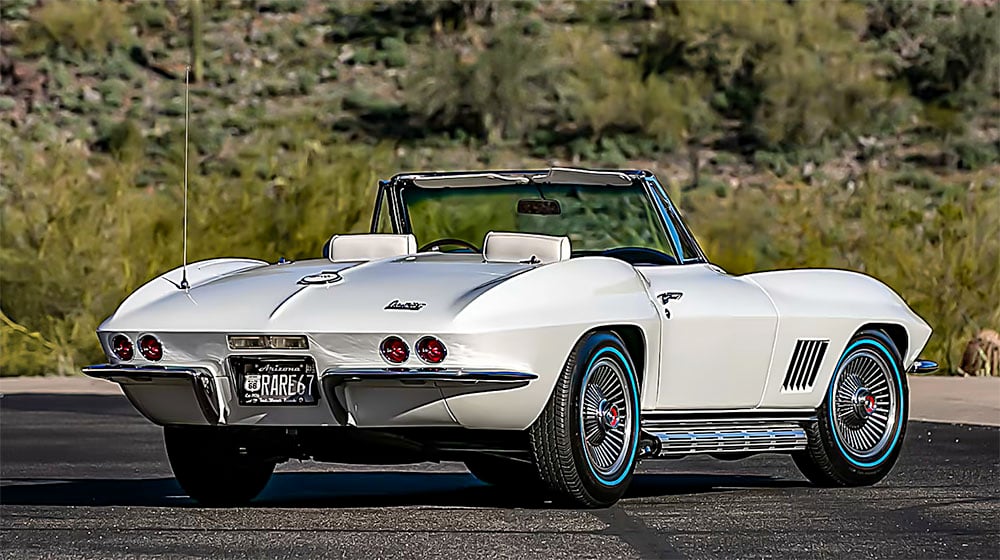

 Few things can spoil a drive in a classic Corvette faster than watching the temperature gauge climb toward the danger zone. That concern becomes even more important when there’s a heat-producing Chevrolet 427 big-block packed beneath the hood.
For owners of 1966-1968 big-block Corvettes who want improved cooling performance without sacrificing the original character of their car, Classic Industries offers the U.S. Radiator High-Efficiency 4-Row Copper/Brass Radiator, part number CRD61044M.
Designed specifically for 1966-1968 Chevrolet Corvettes equipped with the 427-cubic-inch V8, without factory air conditioning and without a transmission cooler, this radiator combines traditional copper/brass construction and an original-style installation with a high-efficiency core engineered to handle the cooling requirements of Chevrolet's legendary big-block.
Built for the 427 Corvette
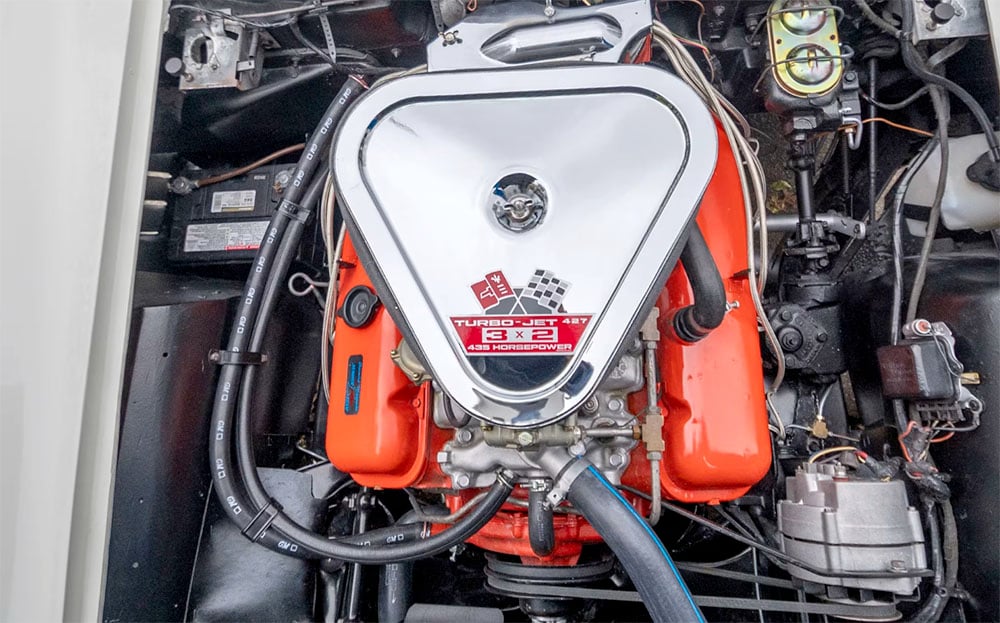
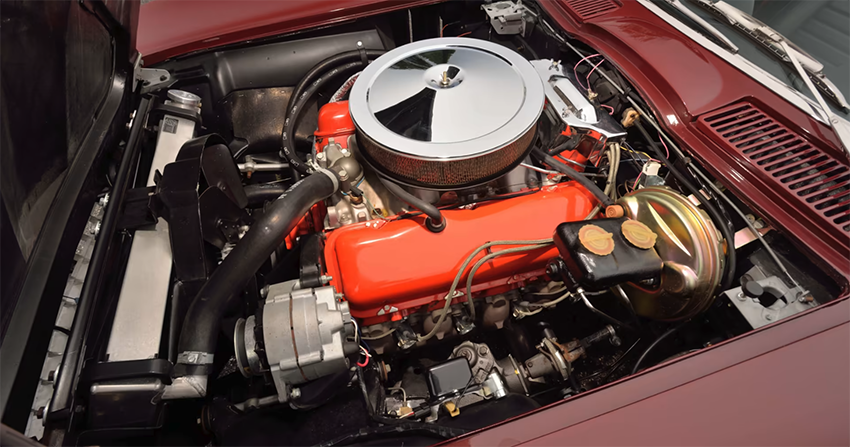
- Above: 1967 Turbo-Fire 427 V-8 (RPO L71). Overhead valves. Cast iron block. Five main bearings, 4-bolt caps.
Displacement: 427 cubic inches.
Bore and stroke: 4.250 x 3.76 inches.
Compression ratio: 11.00:1.
Horsepower: 435 @ 5800 RPM.
Torque: 460 @ 4000 RPM.
Valve lifters: Mechanical.
Camshaft timing: Intake: 316 degrees, Exhaust: 302 degrees, Overlap 80 degrees. Lift: 0.5197″.
Carburetors: Holley three 2-barrel (front) #3902353, (center) #3902355, (rear) #3902353.
Anyone familiar with Chevrolet's Mark IV big-block knows that the 427 can generate plenty of heat, especially during warm-weather cruising, extended idling, or stop-and-go traffic. An effective radiator therefore isn't simply another restoration component — it's an important part of protecting the engine and making the Corvette more enjoyable to drive.
U.S. Radiator addresses that challenge with a four-row high-efficiency copper/brass core. The radiator uses 1/2-inch tubes positioned on 3/8-inch centers, a design intended to increase cooling efficiency while fitting the vehicle without requiring modifications.
That's an important advantage for a restored C2 Corvette. More cooling capability doesn't have to mean cutting, drilling, fabricating brackets, or installing a modern-looking radiator that appears out of place beneath the hood.
High-Efficiency Four-Row Core
At the heart of CRD61044M is its high-efficiency core design.
The closely spaced tubes provide increased cooling capacity within the radiator core. U.S. Radiator states that its four-row High Efficiency design offers greater cooling efficiency than aluminum-core designs due to its tubes being positioned on 3/8-inch centers.
For the Corvette owner, the benefit is straightforward: more effective heat transfer without modifying the car.
That's especially valuable with a big-block Corvette. Whether you're cruising a boulevard on a hot summer afternoon, sitting in traffic on the way to a car show, or putting highway miles on the Sting Ray, additional cooling capacity provides another measure of confidence.
Traditional Copper/Brass Construction
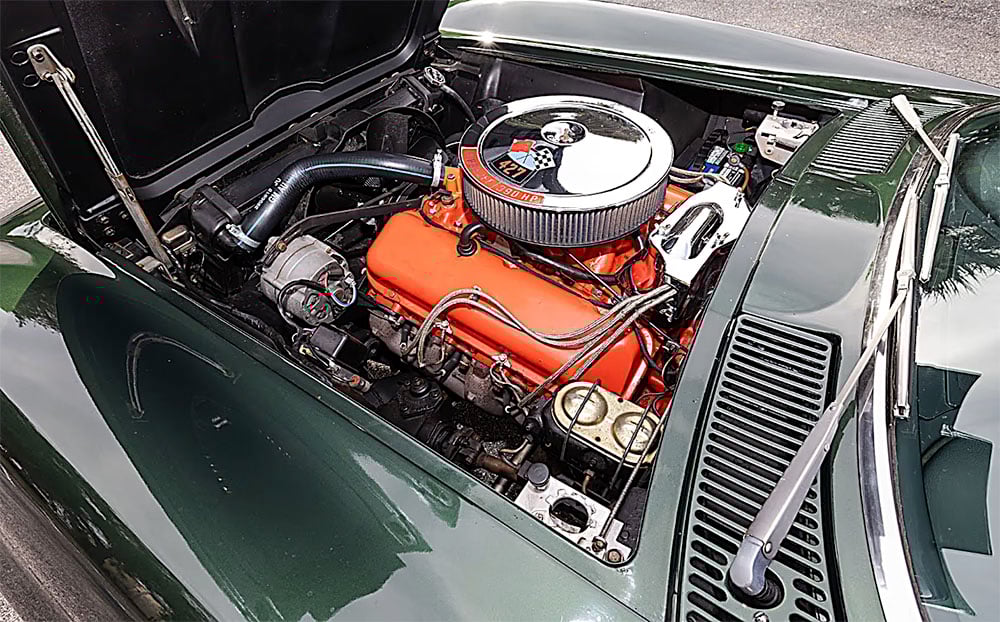
- Above: 1967 Turbo-Fire 427 V-8 (RPO L36). Overhead valves. Cast iron block. Five main bearings.
Displacement: 427 cubic inches.
Bore and stroke: 4.250 x 3.76 inches.
Compression ratio: 10.25:1.
Horsepower: 390 @ 5400 RPM.
Torque: 460 @ 3600 RPM.
Valve lifters: Hydraulic.
Camshaft timing: (with ramps) Intake: 350 degrees, Exhaust: 352 degrees, Overlap 118 degrees. Lift: Intake: 0.4614″; Exhaust: 0.4880″.
Carburetor: Four-barrel Holley #3906633
Rather than using aluminum construction, U.S. Radiator builds CRD61044M using copper and brass, materials traditionally associated with radiators installed in American automobiles of the period.
U.S. Radiator specifies copper/brass construction for dependability, while the material also helps preserve the traditional appearance expected in a vintage Corvette engine compartment.
That combination makes this radiator particularly attractive for enthusiasts who actually drive their Corvettes but don't want an obviously modern-looking cooling component distracting from an otherwise period-correct engine bay.
In other words, it's a useful blend of restoration appearance and upgraded cooling performance.
Installs Like the Original
Cooling performance is only half the equation when restoring a valuable Corvette. Fit and appearance matter, too.
U.S. Radiator designed this reproduction radiator to install like the original unit and mount using original-style brackets. That's a significant advantage over some universal or generic aftermarket radiators that may require fabrication or mounting changes to make them work.
It also helps maintain the appearance of the engine compartment. On a carefully restored C2, details matter, and an obviously incorrect radiator or improvised mounting arrangement can stand out immediately.
Cooling Performance Without Cutting Up Your Corvette
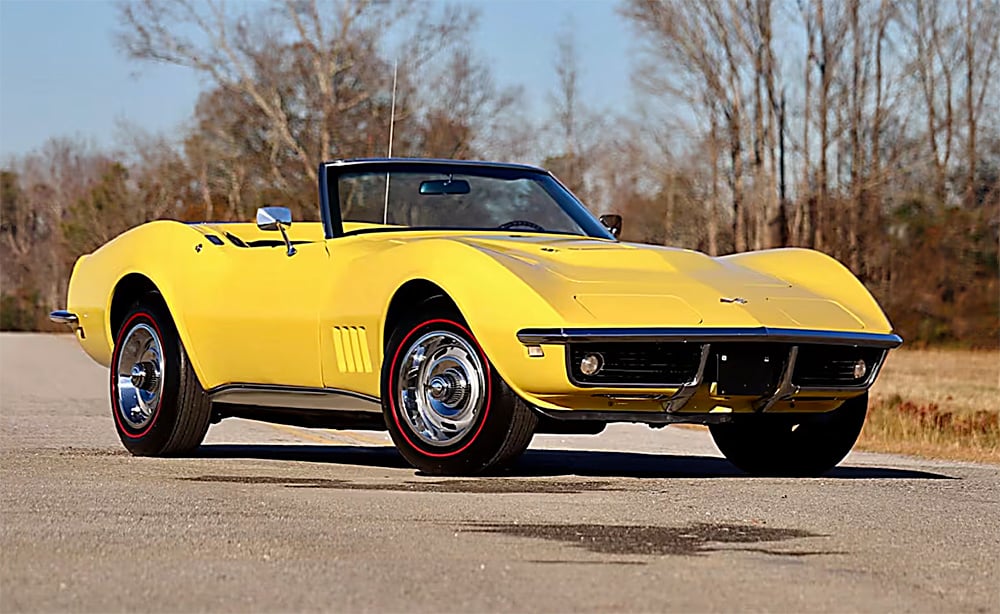
Above: 1968 Corvette convertible with 427 power and Muncie four-speed manual shifting
Perhaps the biggest overall advantage of CRD61044M is that it provides an upgrade where owners need it — cooling efficiency — without forcing them to modify the Corvette to accommodate it.
That's an important distinction.
Many classic-car performance upgrades involve a tradeoff. Improved performance may require drilling new holes, fabricating brackets, changing mounting locations, or installing components that look noticeably different from the originals.
This U.S. Radiator is designed to provide increased cooling efficiency without modifications to the car.
For owners of increasingly valuable big-block C2 Corvettes, preserving the vehicle while improving its road manners is a considerable benefit.
Features, Advantages, and Benefits
Four-row high-efficiency core: More radiator core capacity is available to help manage the heat generated by the 427 big-block.
1/2-inch cooling tubes on 3/8-inch centers: Closely spaced tubes are designed to increase cooling efficiency and heat transfer.
Copper/brass construction: Traditional radiator materials provide dependable construction while retaining a period-appropriate appearance.
Original-style mounting: The radiator is designed to install correctly using original-style brackets rather than requiring a universal mounting arrangement.
No vehicle modifications required: Increased cooling efficiency can be added without unnecessarily cutting, drilling, or modifying the Corvette.
Restoration-friendly appearance: The traditional construction and original-style installation help maintain the character of the engine compartment.
Application-specific design: CRD61044M is engineered for 1966-1968 Corvettes with the 427 V8, without factory air conditioning and without a transmission cooler.
A Smart Upgrade for a Legendary Big-Block
The 1966-1967 Sting Ray and the all-new 1968 Corvette represent an unforgettable period in Corvette performance history, and the availability of Chevrolet's mighty 427 helped make these cars legendary.
Keeping one cool shouldn't require compromising what makes the car special.
The U.S. Radiator CRD61044M High-Efficiency 4-Row Copper/Brass Radiator offers big-block Corvette owners a sensible solution: increased cooling efficiency, durable copper/brass construction, an original-style mounting arrangement, and installation without unnecessary vehicle modifications.
For the enthusiast who wants to drive and enjoy a 427-powered Corvette while preserving its classic appearance, that's an appealing combination.
Classic Industries Part Number: CRD61044M
Application: 1966-1968 Chevrolet Corvette
Engine: 427-cubic-inch V8
Construction: Copper/Brass
Core: 4-Row High Efficiency
Tube Design: 1/2-inch tubes on 3/8-inch centers
Transmission Cooler: No
Factory Air Conditioning: No
Brand: U.S. Radiator
Classic Industries Sells C2 Corvette Parts
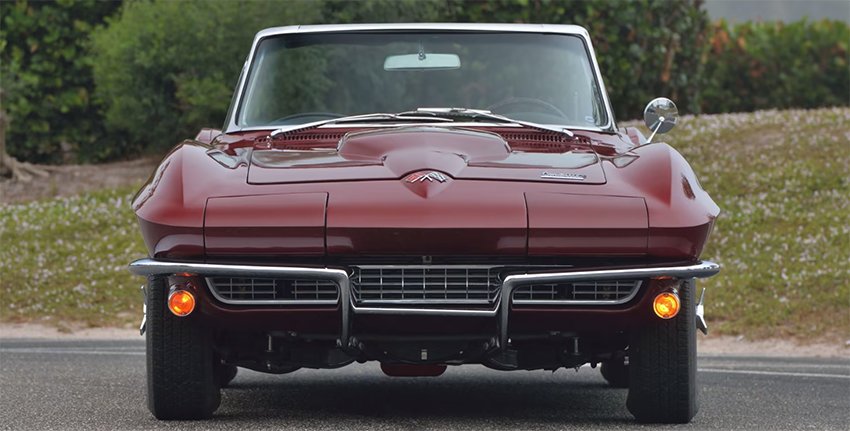
Above: 1966 Corvette convertible with 427 big block V8 power and a Muncie four-speed manual transmission
Whether you have a C2 Corvette coupe or convertible, there's a great chance that Classic Industries has the parts that you need to complete your Corvette and keep it on the road, at the shows, or on the track for years to come, with miles upon miles of smiles in the process.

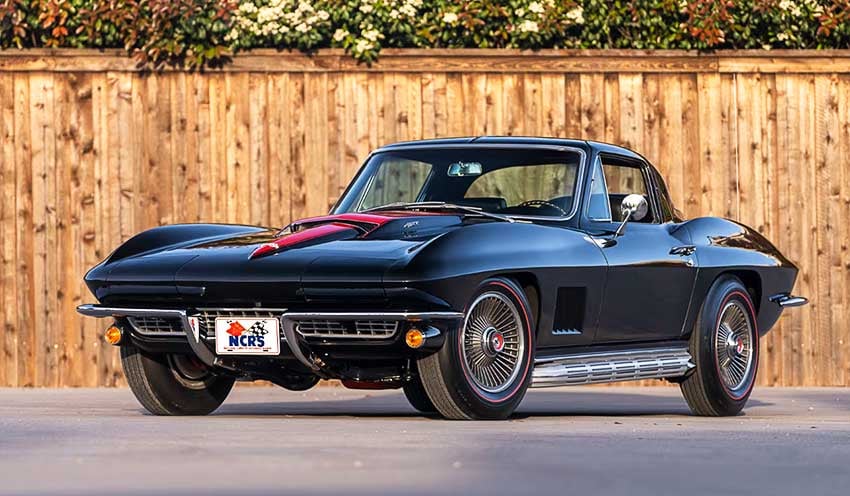
Above and below: All Corvette photos and Corvette 427 engine photos are courtesy of Mecum Auctions.