

There are certain engine designations that require little explanation among Mopar enthusiasts. Say "440," and most Chrysler performance fans immediately know what you're talking about.
The Chrysler RB-series 440 cubic-inch V8 earned its reputation the old-fashioned way—with cubic inches, abundant torque, and enough muscle to motivate some of the largest and quickest performance cars to come out of Detroit. Whether it's nestled between the fenders of a Dodge Charger, Challenger, Coronet, Plymouth Road Runner, GTX, 'Cuda, or another big-block Mopar, a healthy 440 remains one of the great foundations for a serious street-performance engine.

Above: 1970 Dodge Challenger with 440 big block V8 mill (photo courtesy of Mecum Auctions)
But what happens when you want considerably more performance from your 440 without turning the engine into a temperamental, high-strung race mill?
That's where the Edelbrock Performer RPM Power Package Top End Kit, Classic Industries part number E2087, comes into the picture.
Designed for 1968-1979 Chrysler 440 big-block V8 applications, this carefully matched performance package combines many of the critical components needed to transform a mild 440 into a much stronger street performer. Rather than selecting cylinder heads, an intake manifold, camshaft, lifters, timing components, hardware, and gaskets individually—and hoping everything works well together—Edelbrock has done much of the component matching for you.
Better yet, Edelbrock has the dyno numbers to demonstrate what the combination can accomplish: 482 horsepower and 528 lb-ft of torque from a 440 cubic-inch test engine with 9.27:1 compression.
That's serious street-going Mopar muscle.
It's a System, Not Just a Box of Speed Parts

One of the most important aspects of building a performance engine is also one of the easiest to overlook: an engine is a system.
Installing the biggest cylinder heads or most aggressive camshaft available doesn't necessarily produce the best engine. The intake manifold, cylinder heads, camshaft, compression ratio, exhaust system, carburetion, ignition, gearing, and other components need to complement one another.
That's the philosophy behind Edelbrock's Power Package concept.
The E2087 Performer RPM Top End Kit packages major components that have been selected to operate together. According to Edelbrock, the combination is intended to provide improved street performance across approximately the 1,500-6,500-rpm operating range.
That broad powerband is especially attractive for a street-driven 440. Instead of concentrating all the engine's newfound power at an rpm range you'll rarely reach on the street, the Performer RPM combination is designed to provide useful performance across a substantial portion of the tachometer.
Press the accelerator and those 440 cubic inches can get to work.
What's Inside the Edelbrock E2087 Kit?
The E2087 isn't simply an intake-and-cam package. It's a comprehensive top-end combination containing many of the components responsible for getting air into and out of the engine.
The package includes:
- Edelbrock Performer RPM cylinder heads
- Edelbrock Performer RPM Air-Gap intake manifold
- Hydraulic flat-tappet camshaft
- Hydraulic lifters
- Timing chain set
- Complete bolt kits
- Edelbrock gasket set
Each piece plays a role, but the real advantage is how those pieces work together.
Performer RPM Aluminum Cylinder Heads: Let That 440 Breathe

An internal-combustion engine is essentially an air pump. Improving its ability to move air through the combustion chambers can substantially increase its power potential.
That's where the Performer RPM cylinder heads become one of the stars of this package.
The aluminum Edelbrock heads provide improved airflow for performance applications while also reducing weight compared with traditional cast-iron big-block Chrysler cylinder heads.
The E2087 package uses Edelbrock's 60929 Performer RPM cylinder heads, according to Edelbrock's Power Package specifications. Edelbrock lists cylinder-head airflow for the package at up to 292 cfm.
Feature:
High-flow aluminum Performer RPM cylinder heads.
Advantage:
Improved intake and exhaust airflow gives the 440 greater breathing capability, especially as engine speed increases.
Benefit:
The engine can produce substantially more horsepower while retaining the broad torque characteristics that make the 440 such an enjoyable street engine.
Aluminum construction offers another advantage: taking weight off the front of a classic Mopar. A big-block B- or E-body isn't exactly a lightweight to begin with, so replacing heavy iron cylinder heads with aluminum pieces can provide a welcome reduction in front-end mass.
Performer RPM Air-Gap Intake: Keeping the Incoming Charge Cooler

Sitting between those aluminum heads is another well-known Edelbrock performance component—the Performer RPM Air-Gap intake manifold.
The Air-Gap design physically separates portions of the intake runners from the hot engine valley below. This helps isolate the incoming air/fuel charge from engine heat.
Why does that matter?
Generally speaking, a cooler intake charge is denser. Denser air contains more oxygen, and additional oxygen provides greater potential for combustion when accompanied by the appropriate amount of fuel.
The Performer RPM Air-Gap also complements the higher-flowing cylinder heads and camshaft rather than becoming a restriction upstream.
Feature:
Dual-plane Performer RPM Air-Gap aluminum intake manifold.
Advantage:
The raised-runner Air-Gap architecture helps reduce heat transfer into the incoming air/fuel mixture while providing the airflow capacity needed for a performance-oriented 440.
Benefit:
Mopar owners get an intake designed to support strong horsepower without sacrificing the broad street-oriented torque characteristics associated with a properly configured dual-plane manifold.
In other words, this isn't an intake intended solely for a race car that spends its life near redline. It's designed to help make power where a muscular street Mopar can actually use it.
A Camshaft Designed to Make the Combination Work

A performance engine's camshaft has enormous influence over its personality.
Too mild, and those upgraded cylinder heads and intake manifold never reach their potential. Go too aggressive, and you can sacrifice low-speed drivability, vacuum, idle quality, and the very characteristics that make a street car enjoyable.
Edelbrock solves that component-selection problem by including a hydraulic flat-tappet camshaft and matching lifters as part of the E2087 combination.
The camshaft is intended to work with the airflow characteristics of the Performer RPM heads and Air-Gap manifold.
Feature:
Matched hydraulic flat-tappet camshaft and lifter package.
Advantage:
The cam profile is selected as part of the overall Performer RPM combination rather than as an unrelated standalone component.
Benefit:
The engine builder doesn't have to start from scratch trying to determine which camshaft will complement the heads and intake.
For someone building a strong street 440, that takes a considerable amount of uncertainty out of the equation.
Timing Set, Hardware, and Gaskets Are Included


Anyone who has assembled an engine knows how quickly a "simple" performance upgrade can turn into a shopping list.
You've got the heads and intake.
Great.

Now where are the correct gaskets? What about the timing set? Hardware? Lifters?

Edelbrock addresses much of that with the E2087 package. The kit includes a timing-chain set, bolt kits, and an Edelbrock gasket set in addition to the major induction and valvetrain components.
That's an important benefit that doesn't necessarily show up on a dyno sheet.
Feature:
Supporting installation components are packaged with the major performance parts.
Advantage:
Fewer components need to be sourced individually.
Benefit:
The engine builder spends less time chasing parts and more time assembling a combination designed around compatible components.
That's especially valuable for the enthusiast building an engine at home.
482 Horsepower and 528 LB-FT from 440 Cubic Inches
Of course, all those shiny aluminum parts don't mean much unless they produce results.
And this combination does.
Edelbrock tested the E2087 Performer RPM package on a 440 cubic-inch engine with 9.27:1 compression and recorded 482 horsepower and 528 lb-ft of torque.
Those numbers deserve some perspective.
Five hundred horsepower gets most of the attention these days, but 528 lb-ft of torque is the figure that may be even more meaningful in a street-driven Mopar.
Torque is what you feel when you roll into the throttle.
It's what gets a heavy Charger moving.
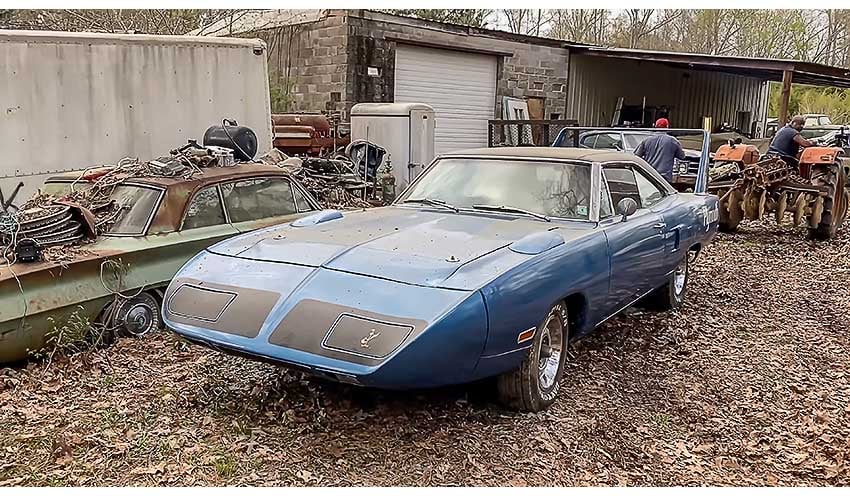
It's what plants you back into the seat of a Road Runner.
And it's a big part of what has made Chrysler's 440 famous for more than half a century.
The Edelbrock package doesn't attempt to change the basic personality of the 440. Instead, it gives that big RB engine substantially greater breathing capacity and horsepower potential while taking advantage of the displacement and torque that were already there.
Actual output, of course, will vary depending upon compression ratio, short-block condition and configuration, carburetion, ignition timing, exhaust system, fuel, tuning, and other variables. Edelbrock's 482-horsepower/528-lb-ft figures should therefore be viewed as the results of its specified test combination rather than a guaranteed output for every engine.
A Broad 1,500-6,500 RPM Performance Range
There's another specification that makes the E2087 especially appealing for street-driven Mopars: its intended 1,500-6,500 rpm operating range.
That's a wide window.
A combination capable of producing useful power beginning around 1,500 rpm can feel responsive during ordinary street driving, while the ability to continue breathing into the 6,000-rpm neighborhood provides plenty of room for spirited acceleration.
For a Mopar enthusiast who actually drives the car, that may be more useful than building an engine that only comes alive at extremely high rpm.
Think muscle car, not Pro Stocker.
Ideal for a Street-Performance Mopar Build
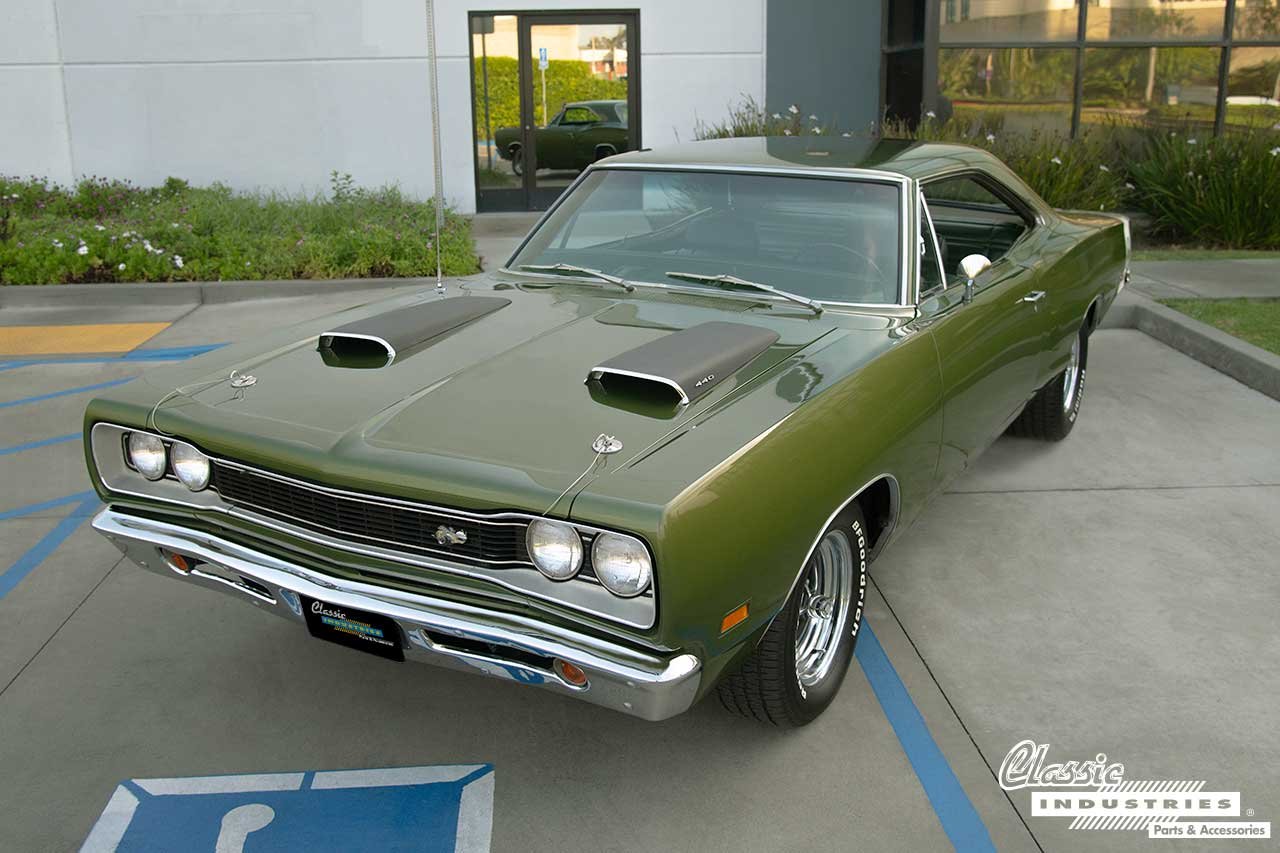
Above: 1970 Dodge Coronet Super Bee with 440 Mopar V8 power
The E2087 package makes particularly good sense for enthusiasts who want to build a strong naturally aspirated 440 without engineering an entire top-end combination one component at a time.
Depending upon the vehicle and overall engine combination, it can be an excellent starting point for big-block-powered Mopar muscle such as a:
Dodge Charger • Dodge Challenger • Dodge Coronet • Dodge Super Bee • Plymouth Road Runner • Plymouth GTX • Plymouth 'Cuda • Plymouth Satellite • Chrysler 300
Fitment should always be verified for the particular vehicle, engine, hood clearance, accessory arrangement, exhaust configuration, and other modifications before installation.
The package is particularly attractive for a Mopar that sees weekend cruising, car shows, occasional highway trips, and those inevitable moments when an open stretch of pavement practically begs you to exercise the secondaries.
The Biggest Advantage: Taking Out the Guesswork
It's tempting to look at the E2087 simply as a collection of Edelbrock performance components.
Its greater value may be component compatibility.
A traditional performance engine build can involve hours of research: Which heads? Which intake? Which cam? Will the springs work with that camshaft? Will the intake support the heads? Is the combination appropriate for the intended rpm range?
Selecting mismatched components can leave horsepower on the table—or produce an engine that's unpleasant to drive.
The Performer RPM Power Package approach simplifies the process by starting with components Edelbrock engineered as a combination.
For many Mopar owners, that's the real selling point.
You aren't simply buying horsepower parts.
You're buying a performance system.
Features, Advantages, and Benefits at a Glance
FEATURE: Performer RPM aluminum cylinder heads
ADVANTAGE: Increased airflow capability with reduced weight compared with traditional cast-iron heads.
BENEFIT: Greater horsepower potential and improved performance while removing weight from the front of the vehicle.
FEATURE: Performer RPM Air-Gap intake manifold
ADVANTAGE: High-flow dual-plane design helps isolate the incoming mixture from engine heat.
BENEFIT: Strong street-oriented torque and horsepower with excellent performance potential throughout a broad rpm range.
FEATURE: Matched hydraulic flat-tappet camshaft and lifters
ADVANTAGE: Camshaft selection is coordinated with the rest of the Performer RPM package.
BENEFIT: Less guesswork when choosing valvetrain components for a performance 440.
FEATURE: Timing set, bolt kits, and gasket set included
ADVANTAGE: Many supporting installation components arrive in the same package.
BENEFIT: Simplifies parts sourcing and helps streamline the engine-building process.
FEATURE: Approximately 1,500-6,500 rpm operating range
ADVANTAGE: Performance isn't confined to an extremely narrow high-rpm window.
BENEFIT: Stronger, more usable power for a Mopar that spends most of its life on the street.
FEATURE: Dyno-tested 440 combination
ADVANTAGE: Edelbrock developed the package as a coordinated system and published test results.
BENEFIT: The enthusiast has a meaningful performance benchmark when planning the engine build.
The Bottom Line: A Serious Upgrade for Chrysler's Legendary 440
There are countless ways to build a Chrysler 440.
You can build one mild enough to idle almost like stock. You can build one wild enough to spend its weekends at the dragstrip. And with enough cubic dollars, you can build one capable of horsepower numbers that would have seemed unimaginable when these engines were new.
The Edelbrock E2087 Performer RPM Power Package Top End Kit occupies a particularly attractive spot between those extremes.
It retains the street-performance philosophy that makes the 440 such a great muscle-car engine while providing modern aluminum cylinder heads, a high-flow Air-Gap intake, a matched performance camshaft and valvetrain package, and many of the supporting pieces necessary to bring everything together.
And with Edelbrock recording 482 horsepower and a stump-pulling 528 lb-ft of torque from a 9.27:1-compression 440, there's plenty of substance behind the package.
For Mopar owners who already have one of Chrysler's legendary 440 big blocks under the hood, that's an appealing proposition.
After all, 440 cubic inches is a pretty good place to start.
Giving those cubes the ability to breathe is an even better way to finish.
Classic Industries Part Number: E2087
Application: 1968-1979 Mopar 440 Big-Block V8
Series: Edelbrock Performer RPM Power Package Top End Kit
Tested Output: 482 HP / 528 LB-FT
Test Engine Compression Ratio: 9.27:1
Intended Performance Range: 1,500-6,500 RPM
Classic Industries Offers Edelbrock Components for Mopar, Ford, and General Motors Muscle Cars
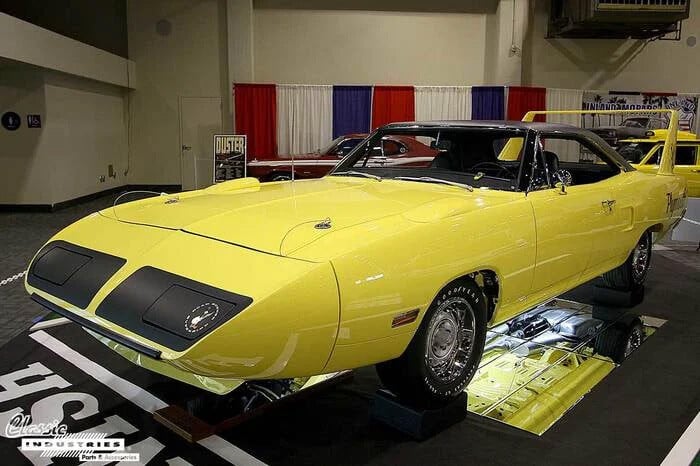
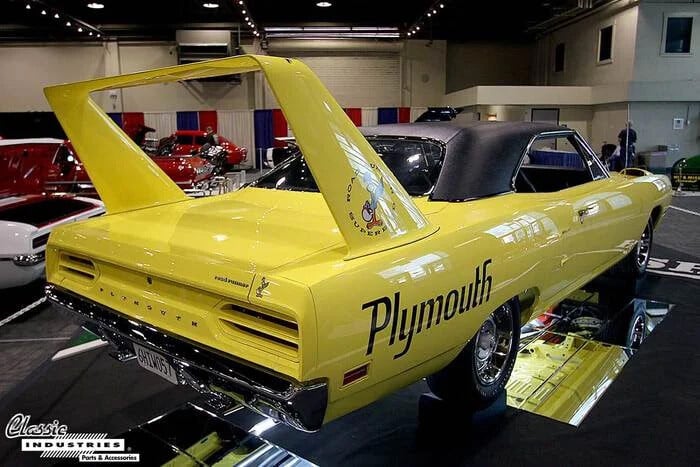
Above: 1970 Plymouth Superbird with a 440 cubic inch Chrysler Plymouth V8
Classic Industries and Edelbrock have provided an abundance of top quality American pony car and muscle car components for many, many years. Upgrade your muscle car with proven and well rated components from CI! To enhance your parts search, you can shop from one of the many enormous vehicle catalogs that are available both in print and in pdf format. Simply click the button below to find the catalog(s) that you need.